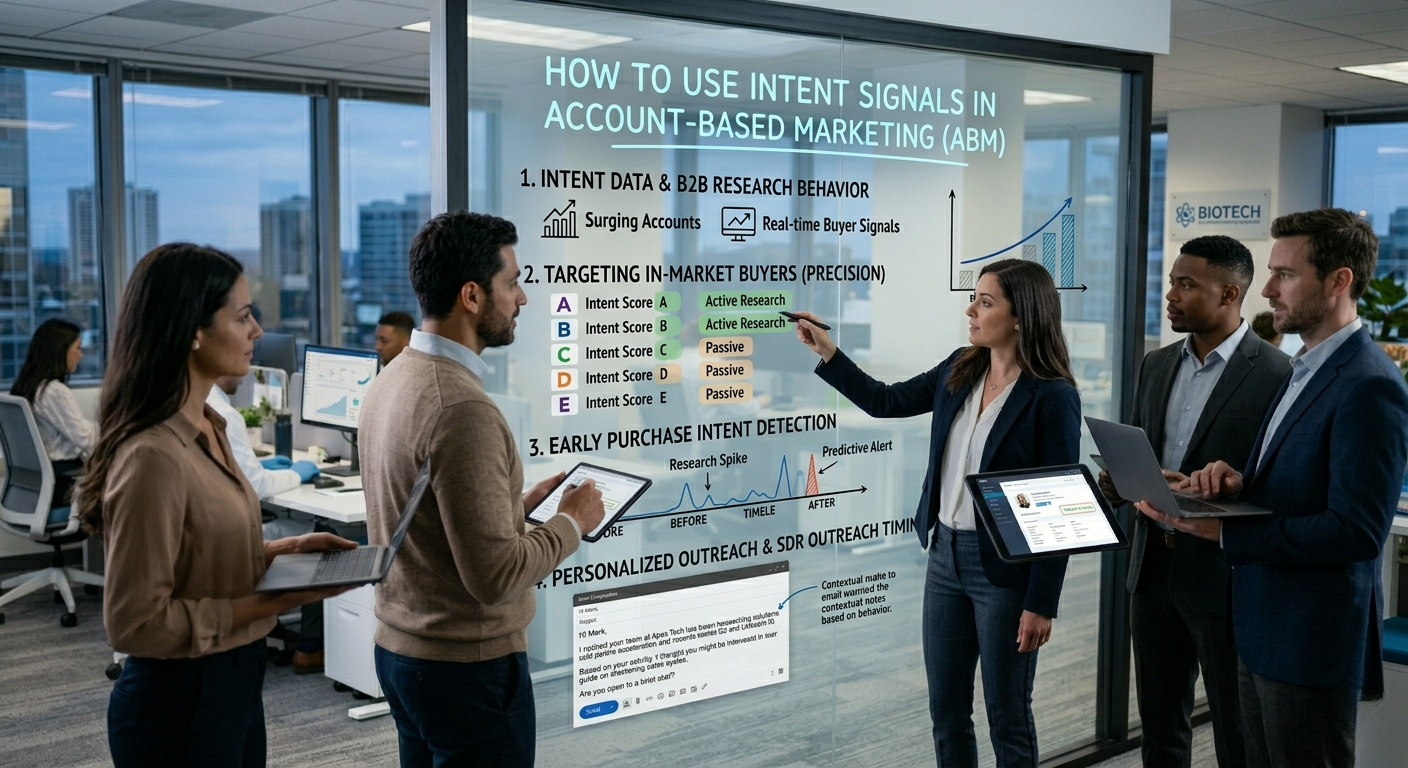


How Modern B2B Buyers Leave Digital Intent Clues Everywhere
Modern B2B buyers rarely start their purchasing journey by speaking directly with a sales representative. Instead, they spend weeks—or even months—researching solutions online, comparing vendors, consuming content, attending webinars, and engaging with industry discussions before ever filling out a form. Every one of those actions leaves behind digital intent clues. For companies embracing intent based marketing, these behavioral signals have become one of the most valuable assets in modern sales and marketing. Instead of relying on cold outreach and static prospect lists, businesses can now identify active buyers earlier, understand what they care about, and engage them at the right moment. As competition increases across B2B industries, the ability to recognize and act on buyer intent signals is quickly becoming a major competitive advantage. Why Timing Is the Missing Piece in Modern B2B Marketing Understanding the modern intent-based marketing definition At its core, intent based marketing is the practice of using behavioral data to identify prospects actively researching products, services, or solutions. Rather than targeting accounts solely based on demographics or firmographics, intent-based strategies focus on real buyer behavior. This includes actions such as: Reading industry content Visiting pricing pages Downloading comparison guides Researching competitors Attending webinars Repeatedly engaging with relevant topics These digital activities reveal where prospects are in the buying journey and how likely they are to make a purchasing decision. Why today’s buyers research long before speaking with sales Modern buyers prefer independent research. Most decision-makers want to understand available solutions, compare vendors, and validate potential investments before engaging with sales teams. This means companies that wait for inbound inquiries often enter the conversation too late. By the time a prospect requests a demo, they may already have a shortlist of vendors in mind. Intent data helps sales teams identify that buying activity much earlier. The shift from cold prospecting to behavior-driven targeting Traditional prospecting often depends on mass outreach campaigns with little context behind them. Intent-based marketing changes that approach by prioritizing accounts already showing signs of interest. Instead of asking, “Who fits our ICP?” companies now ask: “Who is actively researching solutions right now?” That shift dramatically improves targeting precision. How digital intent signals create a competitive advantage Timing matters in B2B sales. Organizations that detect buyer interest early can engage prospects before competitors recognize the opportunity. This creates advantages such as: Higher response rates Better conversations Stronger personalization Shorter sales cycles Improved conversion efficiency What Are Digital Buyer Intent Clues? Understanding B2B buyer intent data and online behavior patterns B2B buyer intent data refers to behavioral insights collected from digital interactions across websites, content platforms, communities, and third-party sources. These behaviors reveal what prospects are researching and how urgently they may be evaluating solutions. The role of purchase intent signals in identifying active demand Purchase intent signals help companies identify when a buyer is moving beyond casual interest into active evaluation mode. Examples include: Increased visits to pricing pages Product comparison research Competitor-related searches Demo-related content consumption Repeated engagement with solution-focused topics These signals help revenue teams focus on accounts more likely to convert. How buyer signals reveal interest, urgency, and buying readiness Not all engagement means the same thing. A single blog visit may indicate curiosity. But repeated visits, combined with webinar attendance and pricing page activity, suggest much stronger buying intent. Behavioral intensity often reveals urgency. Why digital behavior is reshaping outbound lead generation Outbound sales is no longer just about volume. Modern teams prioritize relevance and timing. Intent data enables SDRs and marketers to focus on buyers actively researching solutions rather than randomly targeting large prospect lists. Where Modern Buyers Leave Intent Signals Online Website visits, repeat sessions, and content engagement Company websites remain one of the strongest sources of first-party intent data. High-value actions include: Multiple page visits Long session durations Resource downloads Product-focused engagement Returning visitors These patterns often reveal growing buyer interest. Third-party research activity and comparison behavior Buyers also leave intent clues across review platforms, forums, analyst sites, and industry publications. Researching comparisons between vendors is often a strong buying signal. Webinar attendance, downloads, and community participation Educational engagement frequently indicates active evaluation. Prospects attending webinars, downloading technical guides, or participating in niche communities are often moving deeper into the buying journey. Social engagement and industry content consumption patterns Social activity can also reveal intent. Buyers who consistently engage with industry trends, competitor announcements, or educational content may be actively exploring solutions. Real-Time Buyer Behavior Tracking and Prospect Readiness Using real-time buyer behavior tracking to identify active buyers Real-time tracking allows businesses to monitor behavioral changes as they happen. Instead of relying on outdated lead data, companies can identify accounts actively researching solutions right now. Detecting spikes in engagement across digital channels Sudden increases in engagement often signal urgency. Examples include: Sharp increases in website visits Multiple employees researching simultaneously High-frequency content engagement Rapid increases in comparison research These spikes typically indicate growing purchase readiness. Understanding urgency through behavioral patterns Intent data is most powerful when analyzed over time. Patterns reveal whether prospects are casually browsing or actively preparing to buy. Recognizing when prospects move from curiosity to buying intent The transition from awareness to active evaluation is where timing becomes critical. Organizations that identify this shift early can engage prospects before competitors do. Early Purchase Intent Detection Gives Sales Teams an Edge Why early purchase intent detection matters in competitive markets The earlier a company identifies demand, the more influence it has over the buying process. Waiting too long often means competing against established vendor preferences. Using account intent monitoring to identify demand before competitors do Account intent monitoring tracks engagement across target organizations to uncover rising interest. This allows sales teams to prioritize accounts showing active buying behavior. Engaging buyers earlier in the research process Early engagement helps companies shape buyer perception before shortlists are finalized. This can significantly improve win probability. Turning behavioral clues into proactive outbound opportunities Intent signals transform outbound sales from reactive prospecting into proactive engagement. Instead of interrupting buyers,