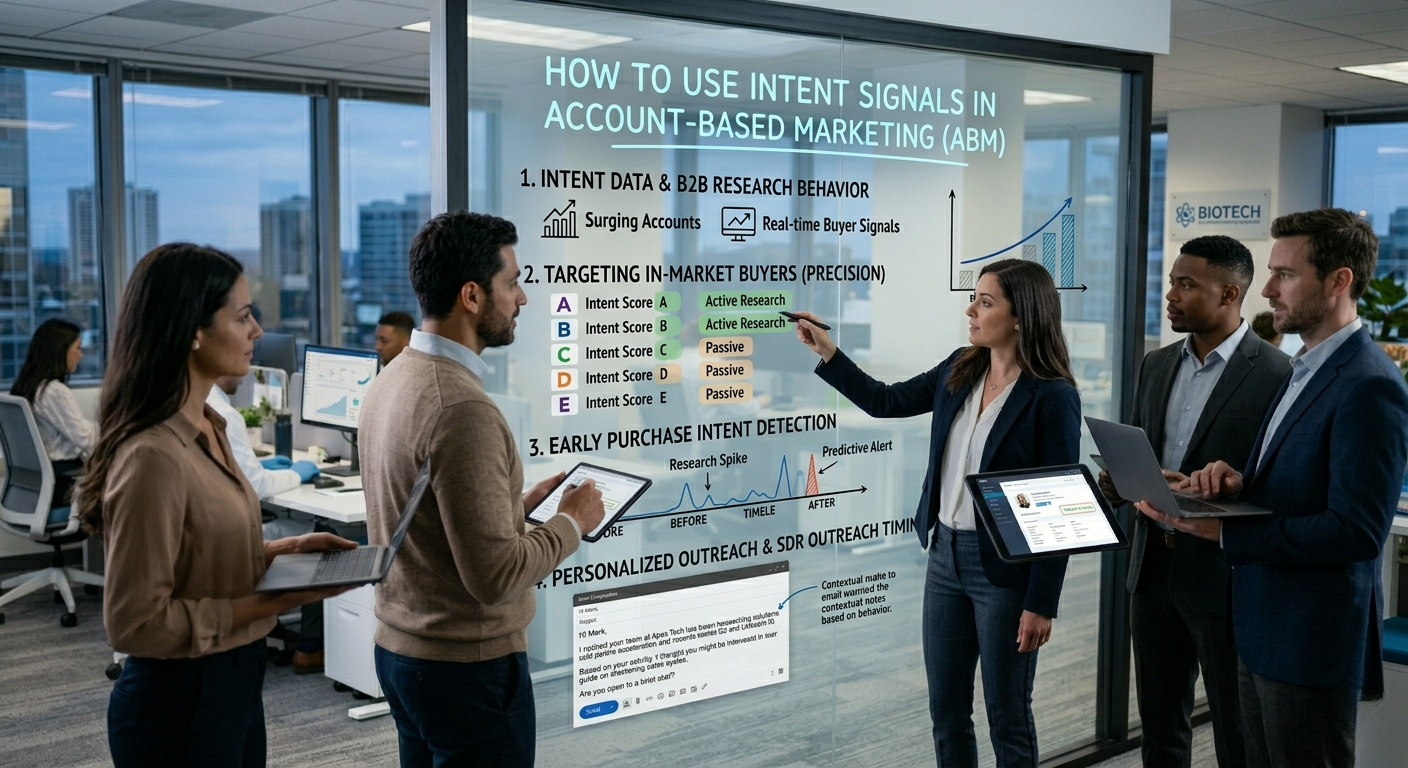


How Intent Data Supports Multi-Channel ABM Campaigns
Modern Account-Based Marketing (ABM) has evolved far beyond static target lists and generic multi-touch campaigns. Today’s buyers move independently across channels, consuming content, comparing solutions, and engaging with brands on their own terms. To keep up, marketing and sales teams need more than firmographic data. They need intent-based marketing powered by real-time behavioral insights. Intent data allows ABM teams to identify which accounts are actively researching solutions, what they care about, and when they are most likely to engage. This transforms ABM from a broad targeting approach into a precise, coordinated, multi-channel execution strategy. Instead of asking “Who should we target?”, teams are now asking “Who is already in the market—and how do we reach them everywhere they are?” Why Intent Data Is Transforming Modern ABM Strategies Understanding the modern intent-based marketing definition Intent-based marketing is the practice of using behavioral signals—such as content consumption, search activity, and engagement patterns—to identify accounts showing active buying interest. In ABM, this means shifting from static ICP targeting to dynamic, behavior-driven prioritization. Why traditional ABM struggles without behavioral insights Traditional ABM relies heavily on predefined account lists. While useful for structure, these lists fail to indicate timing or urgency. Two identical accounts may look equally valuable on paper, but only one may be actively in a buying cycle. Without intent data, ABM campaigns often waste resources on accounts that are not ready to engage. The shift toward data-driven targeting in B2B marketing B2B marketing has moved from broad segmentation to precision targeting. Behavioral data now plays a central role in identifying where accounts are in the buyer journey. This shift allows teams to prioritize engagement based on real-time activity rather than assumptions. How intent creates a competitive advantage in ABM execution Intent data gives teams a timing advantage. When you know which accounts are actively researching solutions, you can engage earlier, personalize better, and influence decisions before competitors enter the conversation. What Intent Data Brings to Multi-Channel ABM Campaigns Understanding B2B buyer intent data in account-based strategies In ABM, intent data aggregates signals from multiple sources to create a unified view of account activity. This includes content engagement, search behavior, ad interactions, and third-party research activity. The role of purchase intent signals in identifying active accounts Purchase intent signals indicate when an account moves from passive awareness to active evaluation. These signals help ABM teams identify which accounts deserve immediate multi-channel engagement. Using buyer signals to unify messaging across channels Intent data ensures consistency across email, paid ads, and sales outreach by aligning messaging with what buyers are actively researching. Instead of fragmented communication, ABM becomes coordinated and context-aware. Why intent improves precision in multi-touch engagement Multi-touch campaigns only work when each touchpoint is relevant. Intent data ensures that every interaction reflects where the buyer is in their journey, increasing engagement quality across channels. Behavioral Targeting Across Multiple ABM Channels Applying behavioral targeting in B2B marketing across email, ads, and sales outreach Behavioral targeting allows teams to adjust messaging based on real-time engagement signals across email, paid media, and outbound sales. This creates a synchronized experience across all channels. Aligning messaging based on real-time engagement patterns When accounts show increased interest in specific topics, ABM campaigns can immediately adjust messaging to match that interest. This improves relevance and reduces friction in engagement. Using real-time buyer behavior tracking to coordinate campaigns Real-time tracking allows teams to identify when accounts are actively engaging with content and respond instantly across multiple channels. Ensuring consistency across all customer touchpoints Intent data ensures that messaging remains consistent, regardless of channel, creating a unified account experience that builds trust and recognition. Early Purchase Intent Detection Improves Campaign Performance Why early purchase intent detection is critical in ABM success The earlier an account is identified as in-market, the more influence ABM teams can have over the buying process. Early detection creates more opportunities for engagement and positioning. Using account intent monitoring to identify active research accounts Intent monitoring tools track when accounts begin researching relevant topics, signaling the start of a potential buying cycle. Engaging high-value accounts before competitors enter the funnel Early engagement provides a first-mover advantage, allowing teams to shape evaluation criteria before competitors are considered. Turning early signals into coordinated multi-channel outreach Once intent is detected, teams can immediately activate coordinated outreach across email, ads, and sales touchpoints for maximum impact. High-Intent Prospect Identification for ABM Success Strategies for high-intent prospect identification in account-based campaigns ABM teams use behavioral scoring models to identify accounts with the highest likelihood of conversion based on engagement intensity. Prioritizing accounts based on engagement depth and frequency Accounts that repeatedly engage with high-value content are prioritized for immediate outreach. Filtering low-intent accounts from ABM targeting lists Intent data helps remove accounts that are not actively researching, improving overall campaign efficiency. Improving pipeline quality through intent-based segmentation Segmentation based on behavior ensures that only qualified, in-market accounts enter ABM workflows. Intent Data Platforms Power Multi-Channel Execution How intent data platforms centralize buyer intelligence Intent platforms consolidate behavioral signals from multiple sources into a single dashboard, giving teams a complete view of account activity. Integrating intent insights into CRM, ads, and outreach tools Modern ABM stacks integrate intent data directly into CRM systems, advertising platforms, and sales engagement tools. Automating account prioritization across channels Automation ensures that high-intent accounts are instantly flagged and prioritized across all marketing and sales channels. Scaling ABM execution with unified intent signals With centralized intent intelligence, teams can scale personalized ABM campaigns without losing relevance or precision. Timing Outbound Campaigns Using Buyer Intent Signals Why timing outbound campaigns impacts ABM effectiveness Even the best messaging fails if delivered at the wrong time. Intent data ensures outreach aligns with active buying windows. Using predictive marketing strategies to optimize engagement timing Predictive models help identify when similar accounts are likely to enter the market based on historical behavior patterns. Coordinating outreach based on active buyer research windows Sales and marketing teams can align outreach with moments when accounts are actively