

Please enter subscribe form shortcode

What’s the Difference Between Third-Party vs First-Party Intent Data in B2B Lead Generation?

Introduction — Why Intent Data Is Reshaping B2B Lead Generation The Rise of Data-Driven Decision-Making B2B buying journeys have become more complex, longer, and heavily research-driven. As a result, companies are shifting from broad outreach to intent-based marketing that prioritizes leads showing real signs of interest. Intent data gives marketers the clarity to understand who is engaged, what they care about, and when they might be ready for deeper conversations. Why Understanding Intent Sources Is Essential for Accurate Targeting Not all intent data is equal. Some signals come directly from your owned channels. Others come from third-party networks that track buyer research across the web. Knowing how these data sources differ helps teams avoid false positives, personalize outreach more effectively, and focus on the accounts that truly matter. What Is Intent Data? Definition and Purpose in B2B Marketing Intent data is information that reflects a prospect’s interest in a topic, product, or solution. It is one of the foundations of intent-based marketing because it offers visibility into behaviors that suggest a buyer is moving through the research and evaluation stages. How Intent Reveals Buying Stage and Level of Interest Different signals correspond to different levels of readiness. For example, reading an industry article may indicate early awareness, while visiting your pricing page signals stronger intent. Understanding this progression helps teams prioritize outreach and tailor messaging to match the buyer’s journey. What Is First-Party Intent Data? Examples of First-Party Signals Website activity Visits to key pages such as pricing, features, comparison articles, and case studies. Email engagement Opens, clicks, reply behavior, and activity on nurture sequences. Form fills and webinar attendance Downloads, registrations, event attendance, and user-submitted information. Product usage signals In-product events such as feature adoption or trial activity (for SaaS or product-led growth companies). Strengths of First-Party Intent Highly accurate These signals are tied directly to user behavior within your own ecosystem, making them extremely reliable. Directly connected to your brand First-party behavior reveals intent specifically toward your product, not just the category. Immediate personalization potential Since you can identify the user or account, you can personalize emails, ads, or SDR outreach instantly. Limitations of First-Party Intent Limited reach You only see behavior from people already interacting with your brand. Only captures prospects already aware of you It cannot reveal new accounts that are researching the problem but have not discovered your website yet. What Is Third-Party Intent Data? Examples of Third-Party Signals Content consumption across the web Topic-level trends based on articles, guides, and resources consumed on external publisher sites. Review website behavior Activity on comparison platforms or review sites where buyers evaluate vendors. Research activity monitored by intent data providers Aggregated behavioral data from providers like Bombora, G2, or ZoomInfo that track topic surges across multiple domains. Strengths of Third-Party Intent Expands reach beyond existing audience You can spot accounts researching your category before they ever visit your site. Identifies accounts researching relevant topics This uncovers in-market buyers early in their journey, sometimes weeks or months before they engage with your brand. Helps uncover in-market buyers early Teams can prioritize outbound and build targeted awareness campaigns before competitors engage. Limitations of Third-Party Intent Varies in accuracy depending on source Different providers have different collection methods, so signals should be validated before action. Requires context to avoid misinterpretation A spike in topic research may not indicate a real purchase. It may relate to general interest, industry education, or competitor-specific research. First-Party vs Third-Party Intent — Key Differences Accuracy First-party data is more accurate because it reflects direct engagement with your brand. Third-party intent is broader and sometimes noisier, but still valuable for early detection. Reach First-party intent is limited to your existing audience. Third-party intent expands visibility across the entire market. Timeliness Third-party signals often appear earlier in the buying cycle. First-party signals typically appear later when buyers are further down the funnel. Signal Strength and Buyer Stage First-party intent tends to correlate with mid-to-late stage buying activity. Third-party intent often reflects top-of-funnel or early-stage behavior. How to Combine Both for Stronger Lead Generation Step 1 — Map Signals to the Buying Journey Identify which signals belong to awareness, consideration, and decision stages. This builds a clear framework for timing outreach. Step 2 — Blend Data for More Complete Scoring Create scoring models that combine both data types. For example, a surge in third-party research plus a visit to your pricing page signals high urgency. Step 3 — Align Sales and Marketing Around Shared Definitions Both teams should agree on what constitutes a qualified signal, a warm account, and a high-priority buyer. Step 4 — Build Multi-Touch Campaigns Triggered by Intent Signals Use intent to personalize email outreach, increase LinkedIn engagement, create targeted ad audiences, and tailor sales sequences. Practical Use Cases Using Third-Party Intent to Discover New Accounts Sales teams can identify companies researching relevant topics and prioritize them for outbound. Using First-Party Intent to Personalize High-Intent Leads Marketing and SDR teams can tailor outreach based on specific page visits or engagement signals. Using Combined Intent to Prioritize SDR Outreach Unified scoring helps SDRs focus on the highest-value accounts and reduce wasted time on low-intent prospects. Common Mistakes Companies Make Treating intent signals as purchase-ready Intent shows interest, but it does not guarantee urgency. Timing matters. Relying too heavily on one source of data Using only first-party or only third-party intent creates blind spots. Poor scoring and lack of context Not all signals have equal weight. Understanding patterns is more important than reacting to single events. Ignoring alignment between marketing and sales Intent is most effective when both teams share definitions, scoring rules, and follow-up steps. Key Metrics to Track to Measure Impact Lead-to-Opportunity Conversion Rate Shows how well intent-qualified leads move through the pipeline. Sales Cycle Length Shorter cycles often indicate accurate timing and better prioritization. Account Engagement Over Time Tracks whether accounts deepen their interaction across channels. Pipeline Contribution from Intent-Driven Leads Reveals how much revenue pipeline originates from intent-based marketing efforts. Final Thoughts

What Most Companies Get Wrong About Intent-Based Marketing

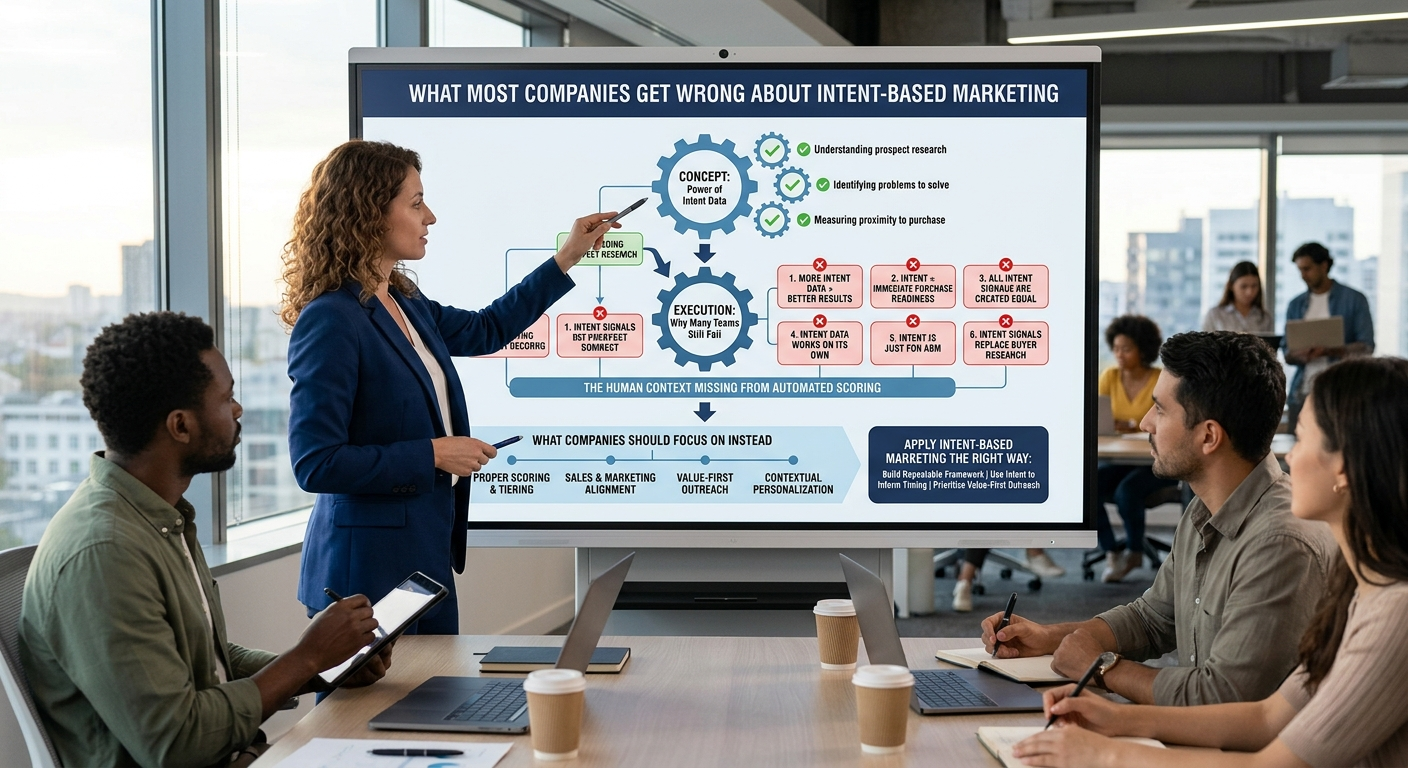
Is Intent-based Marketing Still Worth the Hype? Why Intent Data Is Powerful Intent-based marketing has become one of the most talked-about strategies in B2B. It helps companies understand what prospects are researching, what problems they are trying to solve, and how close they might be to making a purchasing decision. When applied correctly, intent signals can accelerate pipelines, improve targeting, and significantly increase conversion rates. Why So Many Teams Still Fail to Use It Correctly The problem is not the concept. It is the execution. Many organizations buy intent tools, plug them into their tech stack, and assume the insights will magically produce revenue. Without context, strategy, and proper alignment, intent data becomes just another dashboard that no one knows how to interpret. This leads to misalignment, missed opportunities, and frustrated sales teams. Misconception #1: “More Intent Data Means Better Results” The Difference Between Data Volume and Data Quality Many companies believe that more signals automatically lead to better targeting. In reality, quality matters far more than quantity. Ten high-quality signals that reflect real buying behavior are more valuable than a hundred weak indicators like generic page views. Why Overloading Sales with Signals Backfires When sales teams receive endless lists of “intent accounts,” they quickly lose trust in the system. Over-alerting creates noise, not clarity. Reps waste time chasing accounts that are not actually ready to engage, and high-value opportunities get buried. Misconception #2: “Intent = Immediate Purchase Readiness” Understanding Buying Stages Behind Intent Signals Intent signals reveal interest, but interest does not always mean urgency. A spike in topic searches or content consumption might simply indicate curiosity or early-stage problem awareness. Recognizing where a buyer sits across awareness, consideration, and decision stages is crucial. Why Early-Stage Intent Requires Nurture, Not a Hard Sell Reaching out too aggressively to early-stage buyers often pushes them away. These prospects need education, not pressure. Companies that combine intent with value-driven nurture sequences see higher conversion rates and lower pipeline drop-off. Misconception #3: “All Intent Signals Are Created Equal” First-Party vs. Third-Party vs. Product-Level Intent First-party intent includes website visits, product page engagement, and email interactions. Third-party intent comes from external networks such as research sites or publisher data. Product-level intent goes deeper and shows interest specifically in your solution or category. Each type tells a different story, and none should be interpreted in isolation. Which Signals Actually Predict Sales Opportunities Signals tied to higher buying intent, such as pricing page visits, competitor comparison activity, or multiple engagements across channels, tend to correlate strongest with eventual opportunities. Companies that treat every signal as equally important miss the nuance that drives smarter prioritization. Misconception #4: “Intent Data Works on Its Own” The Human Context Missing from Automated Scoring Automated scoring rules can be helpful, but they cannot understand the human factors behind the behavior. A spike in intent may reflect research for a conference presentation, not an upcoming purchase. Human review adds the strategic context algorithms cannot provide. The Risk of Over-Reliance on Tools Without Strategy Buying an intent tool without a clear process is like buying a gym membership without a workout plan. The tool does not create value on its own. It requires strategic adoption, sales alignment, and ongoing refinement. Misconception #5: “Intent-Based Marketing Is Just for ABM” Why Intent Is Equally Critical for Broad Lead Generation ABM teams rely heavily on intent data, but intent is just as important for traditional demand generation. It improves segmentation, prioritization, and channel planning for broader campaigns. Even inbound teams benefit from knowing which industries or accounts show elevated research activity. How Non-ABM Teams Can Leverage It Effectively Traditional SDR teams can use intent insights to warm up cold outreach. Marketing teams can tailor messaging and create targeted ad audiences. Customer success teams can monitor churn risk by tracking competitor intent. Misconception #6: “Intent Signals Replace Buyer Research” Why Intent Still Needs ICP Alignment Strong intent from the wrong ICP is still the wrong lead. Buying signals mean little if the company lacks fit, budget, or need. Intent only becomes powerful when paired with a clear Ideal Customer Profile. Marrying Behavioral Data with Firmographic Fit Companies that combine intent activity with firmographic and technographic filters see higher-quality pipelines. When you know both who the buyer is and why they are showing interest, prioritization becomes far more accurate. Misconception #7: “Intent Data = Personalization” Why Many Teams Still Send Generic Messages Many companies gather intent insights but still send templated outreach. Knowing that an account is researching a topic does not guarantee that your message will resonate. Personalization requires thoughtful framing, not just inserting keywords. Using Intent to Craft Hyper-Relevant Outreach Intent helps you tailor the message to what the buyer is already thinking about. Referencing a specific pain point, a relevant trend, or an industry shift makes the outreach feel far more natural and valuable. What Companies Should Focus on Instead Proper Scoring and Tiering of Intent Signals Prioritize signals based on strength, frequency, and alignment. Build tiers such as low intent, moderate intent, and high-intent accounts to guide your outreach cadence. Multi-Channel Activation Across Email, LinkedIn, and Ads Intent insights are most effective when activated across multiple touchpoints. A combination of targeted email outreach, personalized LinkedIn engagement, and tailored retargeting ads produces stronger response rates. Sales and Marketing Alignment on What “Intent” Really Means Both teams must agree on what qualifies as a meaningful signal, what score makes a lead “ready,” and how to engage each tier. Alignment determines whether intent data becomes revenue-driving or just noise. How to Apply Intent-Based Marketing the Right Way Build a Repeatable Framework Document how you collect, interpret, score, and act on intent signals. A clear workflow ensures consistent application across teams. Use Intent to Inform Timing, Not Just Targeting Intent is most powerful when it helps you reach out at the right moment. Timing often determines whether a conversation turns into a meeting. Prioritize Value-First Outreach Over Aggressive Selling Intent shows interest, but trust still needs to

How to Use Intent Signals in Prioritizing B2B Leads

Why Intent Signals Are Pivotal in B2B Lead Generation Challenges for Prioritizing Leads in Data-Saturated Pipelines Modern B2B marketing teams are drowning in data; CRM entries, website analytics, email open rates, form fills, and social engagement metrics. Yet, despite all this data, many still struggle to identify which leads are actually ready to buy. Without clear prioritization, sales teams waste hours chasing low-intent prospects while high-value opportunities slip through the cracks. This is why intent-based marketing is necessary. Using intent signals allows you to to separate noise from true buying behavior. How Intent Data Can Bridge the Gap Between Interest and Readiness to Buy Intent signals bridge the critical gap between interest (“I’m curious about this topic”) and readiness (“I’m ready to talk to sales”). By tracking behavioral patterns; like repeated visits to pricing pages, engagement with content related to competitor comparisons, or content downloads, businesses can identify prospects who are actively considering solutions and prioritize outreach accordingly. What Are Intent Signals? What They Are and How They Work Intent signals are digital breadcrumbs that indicate a prospect’s interest in specific products, services, or topics. These can come from your own digital properties (first-party data) or external sources (third-party data). They work by monitoring behavioral activity; such as searches, clicks, or engagement, and analyzing patterns that suggest purchase intent. In essence, intent data transforms anonymous digital actions into predictive insights for your sales and marketing teams. Types of Intent Signals First-Party Signals These come directly from your owned platforms; your website, emails, and content assets. Examples include: Repeated visits to high-intent pages (e.g., pricing, demo, or case study pages) Email clicks or responses Downloads of whitepapers, webinars, or reports These are the most accurate and actionable signals because they’re tied to your specific audience behavior. Third-Party Signals Collected from external sources, these include: Keyword search trends related to your product or category Activity on review sites or comparison tools Content consumption from industry media sites Third-party signals expand your visibility beyond your own funnel. This helps you identify prospects researching your category even before they land on your site. Firmographic and Technographic Context To make sense of intent data, context is key. Pair behavioral signals with firmographic (company size, revenue, industry) and technographic (existing tools or tech stack) data to understand the who behind the activity. Why Intent Signals Matter for Lead Prioritization Turning Data Into Insight Not all engagement is equal. Intent data helps you interpret behavioral cues that indicate a buyer’s stage and urgency. For instance: Early-stage leads might read educational blogs Mid-stage leads might download solution guides Late-stage leads might visit pricing or product comparison pages Recognizing these behaviors allows marketing and sales to tailor follow-up strategies and messaging — improving both conversion rates and timing. How Treating All Leads Equally Wastes Resources When every lead receives the same level of attention, efficiency drops. Sales teams chase “curious” prospects while hot leads cool off. Intent-based marketing fixes this by identifying which prospects are most likely to convert, enabling reps to prioritize their pipeline and allocate resources where they’ll yield the highest ROI. How to Identify and Capture Intent Signals Track First-Party Data Your CRM, website analytics, and marketing automation tools are goldmines of first-party intent. Track: Page visits and time on site Email open and click behavior Downloaded assets and webinar participation These touchpoints reveal your audience’s interests and level of engagement. Use Third-Party Data Providers Platforms like ZoomInfo or Demandbase specialize in aggregating and scoring third-party intent data. They monitor topic-level search surges across millions of websites, helping you spot accounts researching your space — even if they haven’t engaged directly with your brand. Cross-Reference Multiple Data Sources Accuracy increases when you correlate intent data across sources. For example, if your CRM shows an account recently engaged with a pricing email, and Bombora shows they’re researching your competitors, that’s a high-priority lead worth immediate outreach. How to Score and Prioritize Leads Using Intent Data Define Key Buying Signals Start by identifying what behaviors indicate buying intent in your funnel — such as product page visits, demo requests, or repeated engagement with solution content. Assign Weights and Scores Assign scores to each behavior based on its proximity to purchase intent. For example: Reading a blog = 5 points Downloading a case study = 15 points Visiting pricing page = 40 points This quantifies engagement into actionable lead scores. Align Scoring with Sales and Marketing Teams Collaborate with both teams to ensure everyone agrees on what defines a “sales-ready” lead. Marketing should qualify leads before handing them off, while sales can provide feedback to refine scoring over time. Refine Based on Conversion Rates Regularly analyze conversion data to validate your scoring model. If certain behaviors consistently lead to sales, adjust your weights to reflect that. Using Intent Data to Personalize Outreach Matching Message to Buying Stage Tailor messaging based on where the lead sits in the journey: Awareness: Focus on education and thought leadership Consideration: Share comparisons, use cases, or ROI data Decision: Offer demos, free trials, or consults Contextual Personalization Across Channels Use insights from intent data to personalize across email, LinkedIn, ads, and calls. For example, if a prospect is reading “data security” content, reference that theme in your outreach message or ad creative. This creates a consistent, relevant experience that builds trust and drives action. Common Mistakes in Using Intent Data Relying solely on one data source without validation Treating all intent signals as equally strong indicators Failing to integrate intent data with CRM workflows Overpersonalizing — using data in ways that feel intrusive or “creepy” Key Metrics to Track When Using Intent Signals Lead-to-Opportunity Conversion Rate Measures how effectively intent-qualified leads move into the pipeline. Sales Cycle Length Shorter cycles often indicate better timing and lead prioritization accuracy. Engagement-to-Booking Ratio Tracks how many engaged prospects actually convert into meetings or demos. Campaign ROI and Pipeline Velocity Evaluates how intent-based marketing impacts overall revenue speed and efficiency. Final Thoughts Intent signals are the missing

Intent Based Marketing vs Account Based Marketing —Which One?

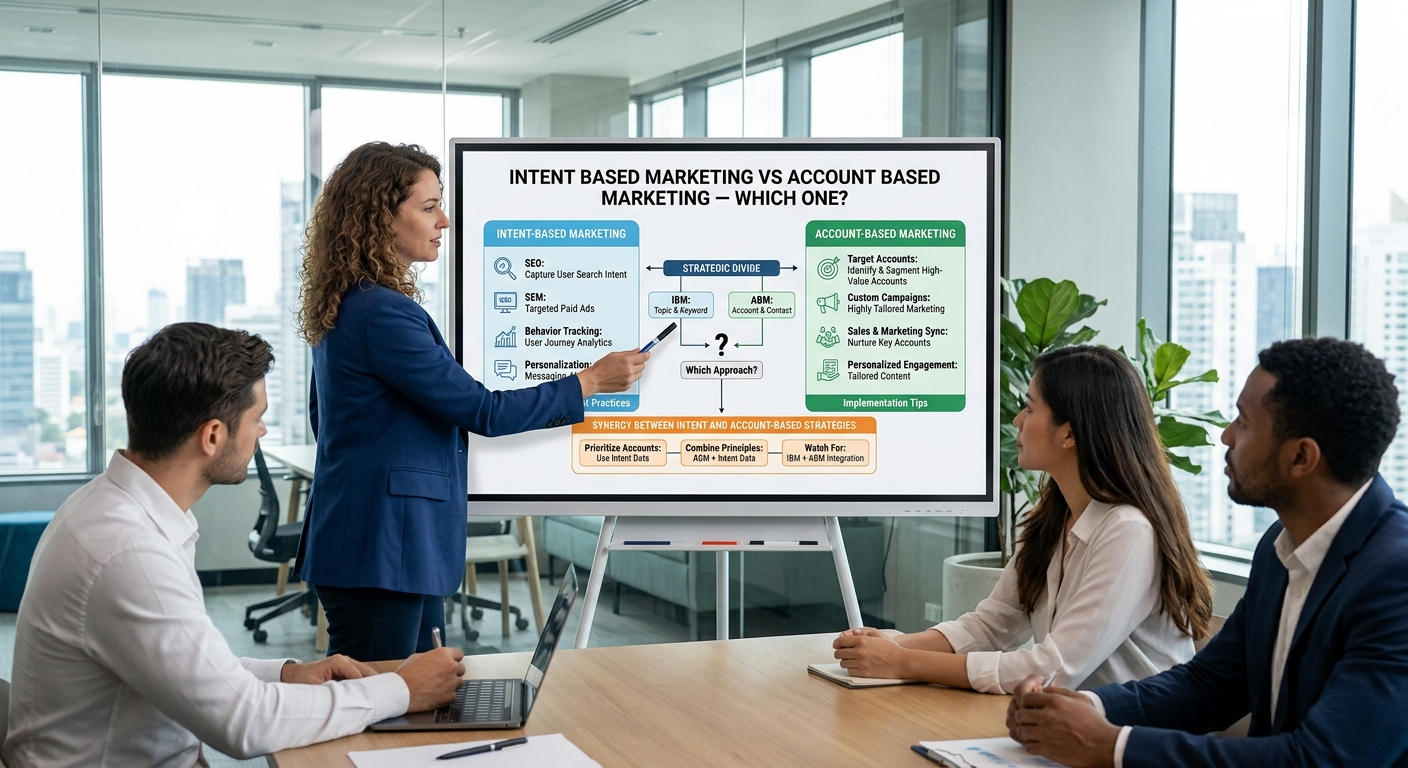
In the dynamic world of digital marketing, precision is key. Businesses are constantly seeking better ways to connect with their ideal customers and deliver messages that resonate deeply with their audience’s needs. This is where intent-based marketing (IBM) and account-based marketing (ABM) shine. But without real-world case studies, how can practitioners apply these concepts effectively? Let’s dive into understanding these strategies and explore practical tips that can be employed right away. Understanding Intent-Based Marketing Intent-based marketing is a data-driven approach that focuses on identifying and responding to the specific intent signals potential customers emit as they navigate the web. It’s about interpreting behavioral data to understand where a prospect is in the buyer’s journey and tailoring marketing efforts to meet those intent signals head-on. Key Components: Utilizing SEO and SEM to capture user search intent Search Engine Optimization (SEO) and Search Engine Marketing (SEM) are pivotal in capturing the intent of users actively searching for solutions online. SEO SEM Implementing Sophisticated Analytics to Track User Behavior Across Platforms Sophisticated data analytics play a crucial role in understanding and reacting to user behavior. Personalizing Content and Messaging to Align With the Prospect’s Stage in the Buying Journey Personalization is key to engaging prospects effectively by delivering relevant messages and content at each stage of their journey. Implementation Best Practices What about Account-Based Marketing? Conversely, account-based marketing is a strategic approach that concentrates marketing resources on a set of target accounts within a market. It employs personalized campaigns designed to engage each account, basing the marketing message on the specific attributes and needs of the account. Core Strategies of Account-Based Marketing ABM shifts the focus from broad-based marketing to a precision-targeted approach that engages specific high-value accounts as markets-of-one. Here are the detailed strategies to execute ABM effectively: Identifying and Segmenting High-Value Accounts Creating Highly Customized Marketing Campaigns Coordinating Sales and Marketing Efforts to Nurture Key Accounts Intent-Based vs. Account-Based: The Strategic Divide While IBM focuses on individual user behavior and ABM on specific business accounts, both strategies require a deep understanding of the target audience to succeed. IBM often drives broader attraction efforts, while ABM requires a narrow, more focused approach. Considerations for Each Approach: Synergy Between Intent and Account-Based Strategies When aligned properly, IBM and ABM can complement each other, blending the precision of intent signals with the focus of account-centric marketing. Lets go into how both of these strategies can meld together! Prioritization of Accounts Using Intent Data Developing a Scoring Model: Operational Integration: Combining ABM Principles with Intent Data Dynamic Content Personalization: Strategic Campaign Execution: What to Watch for in IBM +ABM Integration Ensuring Data Quality and System Integration Data Synchronization: Data Validation Processes: Maintaining Consistent Messaging Across All Touchpoints Brand and Message Alignment: Cross-Departmental Coordination: Practical Tips and Best Practices for Implementation Now that we understand the fundamentals of IBM and ABM, let’s explore how to put these strategies into action. Designing Effective Campaigns: Measuring and Analyzing Success: Optimizing Strategies: Intent-based and account-based marketing are powerful strategies that, when implemented thoughtfully, can drive significant results for B2B companies. By understanding the nuances of each approach and following best practices for deployment and analysis, organizations can create compelling and successful marketing campaigns—even in the absence of specific case studies. If this post has been resourceful for you so far, why not read more? We provide more insights like this in our blog! Learn more and stay up-to-date to current B2B marketing strategies by following us here.