

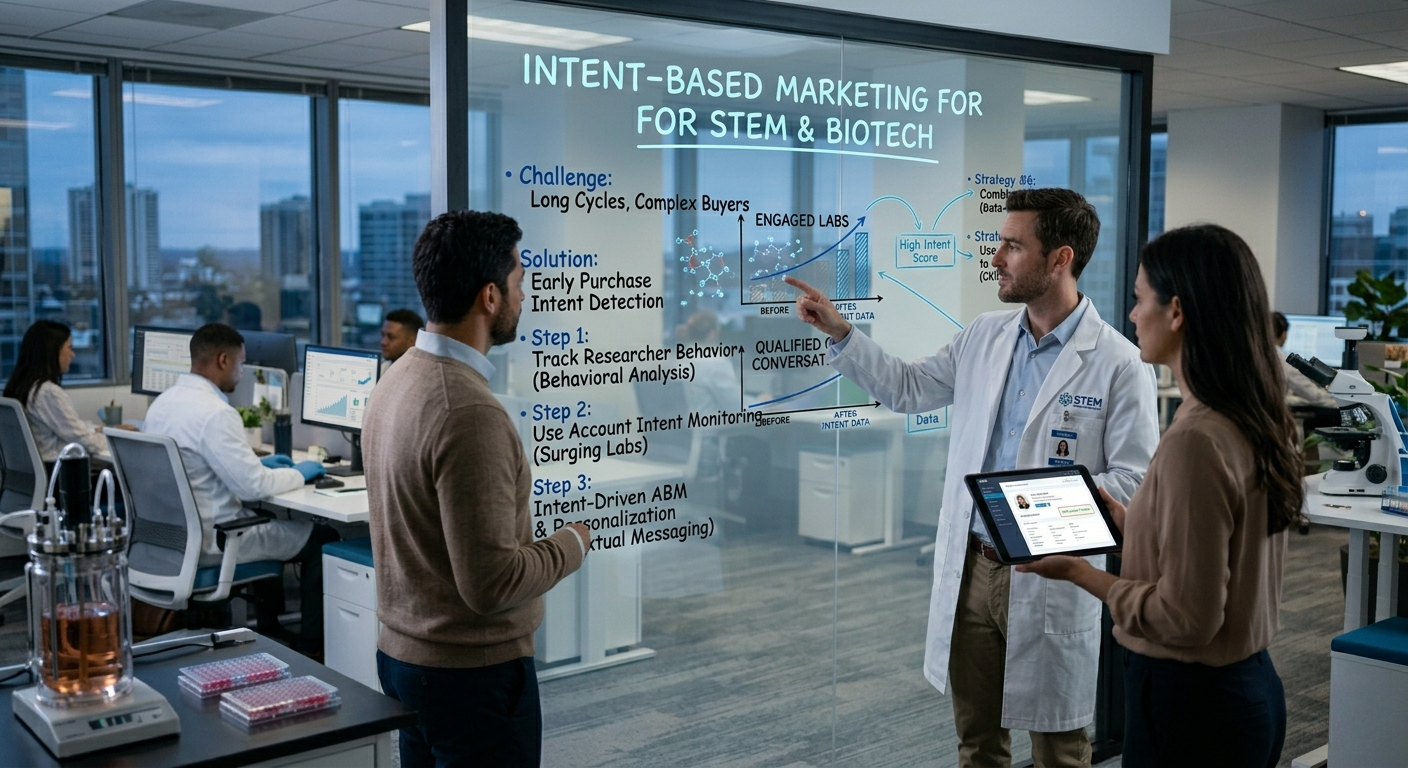
How Intent-Based Marketing Helps Biotech and STEM Companies
Biotech and STEM companies operate in some of the most complex B2B sales environments in the world. Buying cycles are long, products are highly technical, and decision-making often involves multiple stakeholders across research, procurement, compliance, and executive leadership. Traditional outreach methods frequently fail because they rely on broad targeting rather than actual buyer readiness. This is why intent based marketing has become increasingly valuable for scientific and technical industries. Intent data helps biotech and STEM companies identify active buyers earlier, prioritize high-interest accounts, and personalize outreach based on real research behavior. Instead of relying on assumptions, companies can engage prospects using live buyer signals and behavioral insights. In this guide, we will explore how intent based marketing helps biotech and STEM organizations improve lead generation, strengthen account targeting, and create a sustainable competitive advantage. Why Intent-Based Marketing Matters in Biotech and STEM Industries Understanding the intent-based marketing definition in scientific markets Intent based marketing refers to the use of buyer behavior data to identify organizations actively researching products, technologies, or solutions. In biotech and STEM industries, this means tracking signals such as: • Research content engagement • Scientific publication activity • Webinar participation • Product comparison behavior • Technical topic searches • Laboratory technology interest Instead of guessing which organizations may be interested, sales teams can focus on accounts already demonstrating active intent. Why traditional outreach struggles in complex STEM buying environments Traditional outbound campaigns often depend on static lists and generic targeting criteria. However, scientific buyers rarely respond to broad messaging because their needs are highly specialized. Biotech and STEM purchasing decisions involve technical evaluations, regulatory considerations, and long research cycles. Generic outreach frequently lacks the context necessary to create engagement. Without intent data, sales teams often spend time targeting organizations with little or no active buying interest. The growing importance of B2B buyer intent data in technical industries B2B buyer intent data provides visibility into real research behavior across scientific markets. This allows revenue teams to identify which organizations are exploring relevant topics before direct engagement occurs. As competition increases across biotech, medtech, and scientific software industries, early visibility into buyer behavior has become increasingly valuable. How intent data creates a competitive advantage in biotech sales The ability to engage prospects earlier than competitors creates a major strategic advantage. Companies that recognize demand before others can influence buying conversations sooner and establish stronger relationships during the research phase. Intent data also improves efficiency by helping sales teams focus on organizations with genuine interest instead of broad prospect lists. The Unique Challenges of Lead Generation in Biotech and STEM Long buying cycles and multi-stakeholder decision-making Biotech sales cycles are rarely simple. Purchasing decisions often involve: • Researchers • Procurement teams • Compliance departments • Operations leaders • Scientific executives This complexity creates slower decision-making and longer evaluation timelines. Technical complexity and specialized buyer journeys Scientific products often require highly technical education before buyers feel comfortable moving forward. This creates more layered buyer journeys compared to traditional B2B markets. Different stakeholders may also evaluate different priorities, making personalization more difficult. Why identifying real buying intent is difficult in scientific markets Many biotech companies struggle to distinguish between casual scientific interest and genuine purchasing intent. For example, research organizations frequently consume educational content without immediate buying plans. Intent data helps identify stronger behavioral indicators that signal actual purchase readiness. The limits of broad outbound campaigns in niche industries Mass outbound campaigns typically underperform in highly specialized markets because audiences are smaller and more technically focused. Precision targeting becomes far more important than high-volume outreach. Using Buyer Signals to Detect Research and Purchase Intent Early The role of buyer signals in biotech prospecting Buyer signals help biotech sales teams understand which organizations are actively researching relevant technologies or scientific solutions. Signals may include: • Increased engagement with research content • Product category searches • Webinar registrations • Technical documentation downloads • Funding-related research activity These behaviors provide insight into emerging demand. Leveraging purchase intent signals to identify active researchers and buyers Purchase intent signals help differentiate casual interest from active evaluation behavior. For example, multiple visits to pricing pages or integration documentation often indicate stronger purchase readiness than general educational content engagement. Improving early purchase intent detection through behavioral analysis Behavioral analysis helps identify patterns that suggest growing buying intent. This allows teams to engage prospects before competitors recognize the opportunity. Using real-time buyer behavior tracking to uncover emerging demand Real-time buyer behavior tracking enables faster response to research activity. When interest spikes around a specific scientific topic or technology category, sales teams can launch timely outreach while engagement is highest. High-Intent Prospect Identification in Scientific Markets Methods for high-intent prospect identification in biotech and STEM High-intent prospect identification relies on combining multiple buyer signals together rather than depending on isolated actions. Strong indicators often include: • Repeat engagement activity • Multiple stakeholder involvement • Research acceleration • Cross-channel engagement patterns These behaviors suggest genuine buying momentum. Using account intent monitoring to track organization-level research activity Account intent monitoring helps sales teams track engagement across entire organizations rather than focusing on individual contacts alone. This provides broader visibility into institutional buying interest. Recognizing buying patterns across scientific teams and departments Different departments often research solutions independently before formal buying conversations begin. Intent data helps identify these patterns earlier, allowing sales teams to coordinate outreach more effectively. Prioritizing outreach toward in-market research organizations Not every account deserves immediate attention. Intent insights help prioritize organizations actively evaluating relevant solutions. This improves pipeline quality and resource allocation. Targeting In-Market Buyers With Intent Data Moving beyond generic prospect lists to targeting in-market buyers Traditional prospect lists often include companies with no active interest. Intent based marketing improves targeting accuracy by focusing on organizations already demonstrating demand signals. This leads to stronger engagement and higher conversion potential. Applying behavioral targeting in B2B marketing to scientific audiences Behavioral targeting in B2B marketing allows outreach to reflect actual buyer interests instead of assumptions. For scientific audiences, this creates