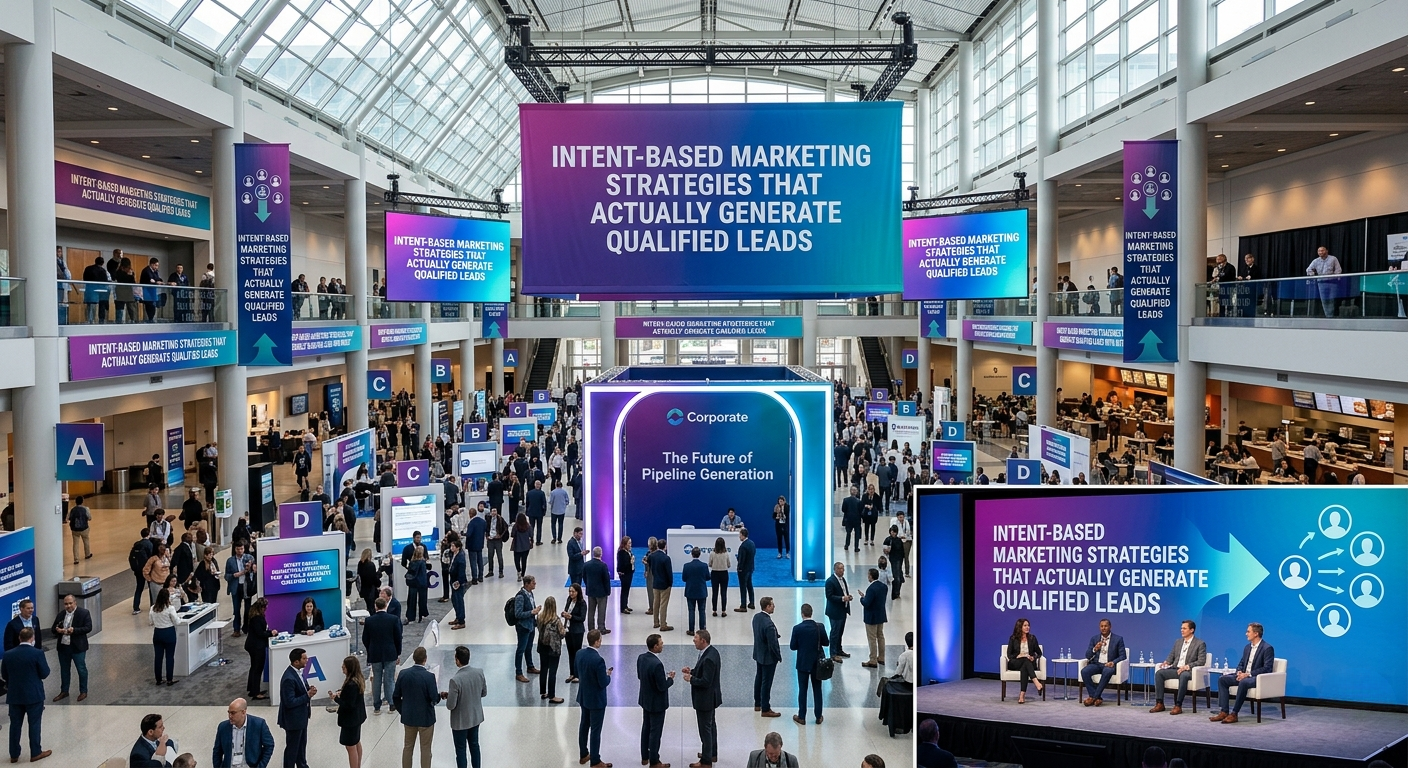
The Role of AI in Intent-Based Marketing
Why AI Is Reshaping Intent-Based Marketing
Modern B2B sales environments are becoming increasingly data driven, competitive, and fast moving. Buyers now complete a large portion of their research before ever speaking to a sales representative. Because of this shift, companies can no longer rely only on broad prospecting or static lead lists. This is where intent based marketing and artificial intelligence are transforming how revenue teams operate.
Understanding the intent-based marketing definition in the AI era
Intent based marketing refers to the practice of using buyer behavior signals and research activity to identify prospects that are actively exploring solutions. Instead of guessing who may be interested, companies can use behavioral insights to focus on accounts showing real buying intent.
Artificial intelligence strengthens this process by analyzing massive volumes of buyer data in real time. AI can identify patterns, prioritize opportunities, and surface signals that humans may overlook. As a result, intent based marketing becomes faster, more scalable, and significantly more precise.
Why modern B2B sales teams rely on AI for buyer intelligence
Today’s sales teams operate in environments where timing and relevance matter more than ever. AI helps organizations process buyer intelligence at a scale that manual research simply cannot achieve.
AI powered systems can:
• Track content consumption across digital channels
• Detect changes in buyer research activity
• Identify trending interests within target accounts
• Prioritize accounts based on buying probability
• Recommend the best timing for outreach
This allows sales teams to focus on the right prospects instead of wasting time on low intent accounts.
How AI creates a competitive advantage in outbound marketing
The companies that identify demand first often gain a major advantage in outbound sales. AI helps businesses uncover active buyers before competitors recognize the opportunity.
For example, AI can detect when multiple stakeholders from the same company begin researching similar topics. This often signals the beginning of an active buying cycle. Companies that respond quickly with relevant outreach are far more likely to secure early conversations and influence buying decisions.
The growing role of automation in intent-driven lead generation
AI powered automation also plays a critical role in scaling intent driven lead generation. Instead of manually reviewing data, teams can automate workflows that surface high intent accounts instantly.
Automated systems can trigger alerts when:
• A target account increases research activity
• Buying intent surges around a specific solution category
• Decision makers engage with competitor content
• Website engagement spikes significantly
This creates a more responsive and efficient prospecting process.
How AI Analyzes Buyer Signals at Scale
AI is especially valuable because of its ability to analyze enormous amounts of behavioral information quickly and accurately.
Using AI to process massive volumes of B2B buyer intent data
Modern buyers leave digital signals everywhere. They consume webinars, read articles, compare vendors, and research solutions across multiple channels. AI systems aggregate this information and transform it into actionable insights.
Without AI, analyzing these behaviors across thousands of accounts would be nearly impossible.
Identifying hidden purchase intent signals across digital channels
Many important buying signals are subtle and difficult to identify manually. AI can detect patterns such as repeated topic searches, content engagement trends, and competitor comparisons.
These signals help companies understand which prospects are moving closer toward a purchasing decision.
Leveraging AI for real-time buyer behavior tracking
Real time tracking gives sales teams the ability to act immediately when intent surges occur. Instead of waiting weeks to identify interest, teams can engage buyers while research activity is actively happening.
This significantly improves outreach relevance and response timing.
Detecting patterns humans would otherwise miss
AI excels at pattern recognition. It can uncover correlations between behaviors that human analysts may overlook.
For example, AI might identify that prospects who engage with certain technical content and attend specific webinars are more likely to convert within a short timeframe. These insights help improve targeting and campaign performance.
AI and Early Purchase Intent Detection
One of the biggest advantages of AI is its ability to identify buying intent early.
How AI improves early purchase intent detection
AI continuously monitors buyer behavior across channels and identifies signs of growing interest before direct inquiries occur.
This enables companies to engage buyers during the research phase rather than after competitors have already entered the conversation.
Predicting buying readiness through behavioral analysis
Behavioral analysis allows AI systems to evaluate how close buyers may be to making decisions. Certain actions often indicate stronger buying intent, including:
• Repeated visits to pricing pages
• Increased engagement with technical documentation
• Frequent searches for implementation content
• Research involving competitor comparisons
AI uses these signals to predict buying readiness more accurately.
Using AI to identify emerging demand before competitors do
Companies that identify demand early can shape conversations before competitors enter the process. AI helps uncover emerging trends within industries, organizations, and buying committees.
This creates opportunities for proactive outreach instead of reactive selling.
Turning buyer signals into proactive sales opportunities
AI transforms raw behavioral data into prioritized sales opportunities. Instead of simply collecting data, revenue teams can act on it immediately with targeted campaigns and personalized outreach.
High-Intent Prospect Identification With AI
Not every prospect deserves equal attention. AI helps businesses focus on the accounts most likely to convert.
AI-powered high-intent prospect identification methods
AI evaluates multiple variables simultaneously, including engagement activity, firmographics, historical conversion patterns, and research intensity.
This creates a more accurate picture of buyer readiness.
Applying machine learning to prioritize accounts and contacts
Machine learning algorithms improve over time by analyzing successful outcomes. As systems gather more data, they become better at identifying which accounts are most likely to move forward in the sales process.
Improving qualification accuracy through predictive scoring
Predictive scoring models allow sales teams to prioritize leads based on conversion likelihood instead of guesswork.
This helps SDRs focus their energy where it creates the greatest impact.
Reducing wasted outreach through intent-based prioritization
Intent based prioritization reduces wasted outreach significantly. Instead of contacting every prospect equally, teams can focus on organizations actively researching solutions.
This improves efficiency while reducing unnecessary prospecting efforts.
Behavioral Targeting and Predictive Marketing Strategies
Behavioral targeting is becoming central to modern B2B marketing strategies.
The role of behavioral targeting in B2B marketing
Behavioral targeting focuses on what prospects are actively doing rather than static demographic information. It allows marketers to personalize campaigns based on actual research activity.
How AI strengthens predictive marketing strategies
AI powered predictive marketing strategies help companies anticipate future buyer behavior. By analyzing historical trends and live signals, AI can forecast which accounts may soon enter active buying cycles.
Anticipating buyer needs before direct engagement happens
Modern buyers expect relevance. AI helps businesses anticipate prospect needs before buyers even request information directly.
This allows companies to deliver content and messaging aligned with evolving priorities.
Using predictive insights to improve campaign planning
Predictive insights help marketing teams launch campaigns more strategically. Instead of relying on fixed schedules, campaigns can align with live market demand and buyer activity.
Timing Outbound Campaigns With AI-Driven Intent Insights
Timing often determines whether outreach succeeds or fails.
Why timing outbound campaigns impacts conversion rates
Even strong messaging may fail if outreach happens too early or too late. AI helps identify the ideal engagement windows based on buyer behavior.
Using AI to determine the best outreach windows
AI systems evaluate engagement patterns to recommend optimal timing for outreach. This improves open rates, replies, and conversation quality.
Coordinating campaigns around live intent activity
Outbound campaigns become more effective when aligned with active research behavior. AI helps synchronize sales outreach with real buyer interest.
Improving response rates through intent-informed timing
When prospects are already researching solutions, they are more likely to engage in meaningful conversations. AI helps companies capitalize on these moments.
Personalized Outreach Using Buyer Intent and AI
Personalization is far more effective when supported by real buyer behavior.
Building personalized outreach using buyer intent data
Intent data helps teams personalize outreach around actual prospect interests instead of generic assumptions.
This creates more relevant conversations from the start.
Using AI to generate context-aware messaging at scale
AI tools can generate messaging tailored to specific industries, pain points, and buyer behaviors. This enables personalization at scale without sacrificing efficiency.
Balancing automation with human personalization
While AI improves scalability, human oversight remains essential. The most effective outreach combines AI generated insights with human empathy and judgment.
Increasing engagement through relevance-driven communication
Relevant communication naturally increases engagement. Buyers respond better when outreach reflects their current interests and challenges.
AI-Powered Intent Data Platforms and Sales Workflows
Technology platforms play a major role in operationalizing intent data.
The role of intent data platforms in AI-driven prospecting
Intent data platforms aggregate and analyze buyer activity across multiple channels. These systems provide sales teams with actionable intelligence about active buyers.
Integrating AI insights into CRM and outbound systems
Integrating intent insights into CRMs allows sales teams to prioritize accounts directly within daily workflows.
This streamlines prospecting and improves execution speed.
Automating account intent monitoring across target accounts
AI powered monitoring systems continuously track account level activity and notify teams when meaningful intent changes occur.
Creating scalable systems for intent analysis and prioritization
Scalable systems ensure companies can consistently prioritize opportunities as they grow.
AI in Account-Based Marketing (ABM)
AI significantly improves the effectiveness of account based marketing strategies.
Strengthening data-driven account-based marketing (ABM) with AI
AI helps ABM teams identify which accounts are actively researching solutions, allowing for better targeting and personalization.
Identifying buying committee activity using intent signals
Enterprise deals often involve multiple stakeholders. AI helps detect engagement patterns across entire buying committees.
Coordinating ABM campaigns around predictive insights
Predictive insights help marketing and sales teams coordinate campaigns more strategically.
Improving account prioritization through AI-powered analytics
AI analytics allow teams to prioritize accounts with the strongest buying signals and highest revenue potential.
Intent Signal Analysis for Better Lead Qualification
Lead qualification becomes more accurate when powered by AI.
Applying AI to intent signal analysis for lead qualification
AI evaluates multiple intent signals simultaneously to determine which accounts deserve immediate attention.
Distinguishing active buyers from passive researchers
Not every researcher is ready to buy. AI helps distinguish genuine purchase readiness from casual interest.
Improving pipeline quality with behavior-based scoring
Behavior based scoring improves pipeline quality by prioritizing prospects most likely to convert.
Supporting more efficient sales qualification workflows
This creates faster and more efficient qualification processes for sales teams.
Aligning Sales and Marketing Through AI and Intent Data
Intent data improves collaboration across revenue teams.
Improving sales and marketing alignment through intent data
Shared buyer insights help both teams focus on the same high priority accounts.
Creating shared prioritization models powered by AI
AI powered models help unify qualification standards across departments.
Coordinating outreach around live buyer activity
Teams can coordinate messaging and timing based on real buyer behavior instead of assumptions.
Building unified revenue strategies around predictive insights
Predictive insights support more cohesive revenue generation strategies across the organization.
How AI Helps Shorten Sales Cycles
AI powered intent analysis helps companies accelerate sales velocity.
Engaging prospects earlier in the buying journey
Early engagement increases the likelihood of influencing buying decisions before competitors do.
Improving outreach timing and contextual relevance
Relevant timing leads to stronger conversations and faster decision making.
Reducing delays caused by poor qualification
Better qualification prevents teams from wasting time on low intent prospects.
Why AI-driven intent insights help shorten sales cycles
When sales teams engage the right buyers at the right time with the right messaging, deals move forward faster.
The Future of AI in Intent-Based Marketing
AI will continue transforming how B2B sales and marketing teams operate.
The evolution of predictive and autonomous prospecting systems
Future systems will become increasingly predictive and capable of automating prospect prioritization more intelligently.
Ethical considerations in AI-powered intent analysis
As AI adoption grows, companies must balance personalization with privacy and ethical data usage.
Why human oversight still matters in AI-driven outreach
Human judgment remains essential for relationship building, strategic decision making, and maintaining authentic communication.
The future of B2B sales will be intent-driven and AI-assisted
The future of B2B growth will combine human expertise with AI powered buyer intelligence. Companies that embrace intent based marketing and AI driven personalization will gain a major competitive advantage in increasingly crowded markets.
Final Thoughts
AI is fundamentally changing how companies approach intent based marketing. Instead of relying on assumptions or broad targeting, businesses can now use real time buyer signals, predictive analytics, and behavioral insights to engage prospects more effectively. AI enables sales and marketing teams to identify demand earlier, personalize outreach more intelligently, and prioritize opportunities with greater precision.
As competition continues increasing across B2B industries, timing and relevance will become even more important. Companies that successfully combine AI with intent based marketing strategies will be better positioned to build stronger pipelines, improve conversion rates, and create more efficient revenue systems for long term growth.
Find what you’re reading informative so far? Then why not read more by visiting our blog? We keep you up-to-date every week with how-to guides and strategies to B2B lead generation every single week! Click here to get started!