

Please enter subscribe form shortcode

Blog

How Intent Data Supports Multi-Channel ABM Campaigns

Modern Account-Based Marketing (ABM) has evolved far beyond static target lists and generic multi-touch campaigns. Today’s buyers move independently across channels, consuming content, comparing solutions, and engaging with brands on their own terms. To keep up, marketing and sales teams need more than firmographic data. They need intent-based marketing powered by real-time behavioral insights. Intent data allows ABM teams to identify which accounts are actively researching solutions, what they care about, and when they are most likely to engage. This transforms ABM from a broad targeting approach into a precise, coordinated, multi-channel execution strategy. Instead of asking “Who should we target?”, teams are now asking “Who is already in the market—and how do we reach them everywhere they are?” Why Intent Data Is Transforming Modern ABM Strategies Understanding the modern intent-based marketing definition Intent-based marketing is the practice of using behavioral signals—such as content consumption, search activity, and engagement patterns—to identify accounts showing active buying interest. In ABM, this means shifting from static ICP targeting to dynamic, behavior-driven prioritization. Why traditional ABM struggles without behavioral insights Traditional ABM relies heavily on predefined account lists. While useful for structure, these lists fail to indicate timing or urgency. Two identical accounts may look equally valuable on paper, but only one may be actively in a buying cycle. Without intent data, ABM campaigns often waste resources on accounts that are not ready to engage. The shift toward data-driven targeting in B2B marketing B2B marketing has moved from broad segmentation to precision targeting. Behavioral data now plays a central role in identifying where accounts are in the buyer journey. This shift allows teams to prioritize engagement based on real-time activity rather than assumptions. How intent creates a competitive advantage in ABM execution Intent data gives teams a timing advantage. When you know which accounts are actively researching solutions, you can engage earlier, personalize better, and influence decisions before competitors enter the conversation. What Intent Data Brings to Multi-Channel ABM Campaigns Understanding B2B buyer intent data in account-based strategies In ABM, intent data aggregates signals from multiple sources to create a unified view of account activity. This includes content engagement, search behavior, ad interactions, and third-party research activity. The role of purchase intent signals in identifying active accounts Purchase intent signals indicate when an account moves from passive awareness to active evaluation. These signals help ABM teams identify which accounts deserve immediate multi-channel engagement. Using buyer signals to unify messaging across channels Intent data ensures consistency across email, paid ads, and sales outreach by aligning messaging with what buyers are actively researching. Instead of fragmented communication, ABM becomes coordinated and context-aware. Why intent improves precision in multi-touch engagement Multi-touch campaigns only work when each touchpoint is relevant. Intent data ensures that every interaction reflects where the buyer is in their journey, increasing engagement quality across channels. Behavioral Targeting Across Multiple ABM Channels Applying behavioral targeting in B2B marketing across email, ads, and sales outreach Behavioral targeting allows teams to adjust messaging based on real-time engagement signals across email, paid media, and outbound sales. This creates a synchronized experience across all channels. Aligning messaging based on real-time engagement patterns When accounts show increased interest in specific topics, ABM campaigns can immediately adjust messaging to match that interest. This improves relevance and reduces friction in engagement. Using real-time buyer behavior tracking to coordinate campaigns Real-time tracking allows teams to identify when accounts are actively engaging with content and respond instantly across multiple channels. Ensuring consistency across all customer touchpoints Intent data ensures that messaging remains consistent, regardless of channel, creating a unified account experience that builds trust and recognition. Early Purchase Intent Detection Improves Campaign Performance Why early purchase intent detection is critical in ABM success The earlier an account is identified as in-market, the more influence ABM teams can have over the buying process. Early detection creates more opportunities for engagement and positioning. Using account intent monitoring to identify active research accounts Intent monitoring tools track when accounts begin researching relevant topics, signaling the start of a potential buying cycle. Engaging high-value accounts before competitors enter the funnel Early engagement provides a first-mover advantage, allowing teams to shape evaluation criteria before competitors are considered. Turning early signals into coordinated multi-channel outreach Once intent is detected, teams can immediately activate coordinated outreach across email, ads, and sales touchpoints for maximum impact. High-Intent Prospect Identification for ABM Success Strategies for high-intent prospect identification in account-based campaigns ABM teams use behavioral scoring models to identify accounts with the highest likelihood of conversion based on engagement intensity. Prioritizing accounts based on engagement depth and frequency Accounts that repeatedly engage with high-value content are prioritized for immediate outreach. Filtering low-intent accounts from ABM targeting lists Intent data helps remove accounts that are not actively researching, improving overall campaign efficiency. Improving pipeline quality through intent-based segmentation Segmentation based on behavior ensures that only qualified, in-market accounts enter ABM workflows. Intent Data Platforms Power Multi-Channel Execution How intent data platforms centralize buyer intelligence Intent platforms consolidate behavioral signals from multiple sources into a single dashboard, giving teams a complete view of account activity. Integrating intent insights into CRM, ads, and outreach tools Modern ABM stacks integrate intent data directly into CRM systems, advertising platforms, and sales engagement tools. Automating account prioritization across channels Automation ensures that high-intent accounts are instantly flagged and prioritized across all marketing and sales channels. Scaling ABM execution with unified intent signals With centralized intent intelligence, teams can scale personalized ABM campaigns without losing relevance or precision. Timing Outbound Campaigns Using Buyer Intent Signals Why timing outbound campaigns impacts ABM effectiveness Even the best messaging fails if delivered at the wrong time. Intent data ensures outreach aligns with active buying windows. Using predictive marketing strategies to optimize engagement timing Predictive models help identify when similar accounts are likely to enter the market based on historical behavior patterns. Coordinating outreach based on active buyer research windows Sales and marketing teams can align outreach with moments when accounts are actively


How Enterprise Companies Use Intent Data to Identify In-Market Accounts

Enterprise sales has changed more in the last five years than in the previous two decades combined. Buyers are more independent, sales cycles are longer, and decision-making is distributed across multiple stakeholders. In this environment, traditional prospecting methods are no longer enough. Static account lists, cold outreach, and firmographic targeting only show who a company is—not when they’re ready to buy. This is where intent-based marketing becomes a critical growth lever. Intent-based marketing allows enterprise teams to move from guesswork to precision by identifying accounts that are actively researching solutions, comparing vendors, and signaling purchase readiness through digital behavior. Instead of asking, “Who fits our ICP?”, teams now ask, “Who is in-market right now?” That shift changes everything. Why Enterprise Sales Teams Are Shifting Toward Intent-Based Marketing Understanding the modern intent-based marketing definition At its core, intent-based marketing is the practice of identifying and prioritizing prospects based on real-time behavioral signals that indicate buying interest. These signals can include content consumption, search behavior, website visits, review platform activity, and engagement across multiple channels. In enterprise environments, intent data helps separate passive fit from active demand. Why enterprise prospecting requires more than static account lists Enterprise sales cycles involve hundreds (sometimes thousands) of potential accounts. A static list of “ideal customers” quickly becomes outdated because buying readiness constantly shifts. A company that wasn’t in-market last quarter may suddenly enter a buying cycle due to funding, leadership changes, or operational pressure. Without intent signals, teams miss these windows entirely. The limitations of traditional lead qualification methods at scale Traditional qualification methods—like firmographics, job titles, and basic scoring models—fail to capture timing. Two companies can look identical on paper, but only one is actively researching solutions. That difference is where revenue is won or lost. How intent data creates a competitive advantage in enterprise sales Intent data gives enterprise teams visibility into active demand before competitors engage. This enables earlier outreach, more relevant messaging, and significantly higher conversion rates. In crowded markets, timing is often the only differentiator. What Intent Data Reveals About Enterprise Buyers Understanding B2B buyer intent data in complex buying environments Enterprise buying is rarely linear. Multiple stakeholders research independently, often without aligning internally until late in the process. Intent data aggregates these fragmented signals into a unified view of account-level interest. The role of purchase intent signals in identifying active enterprise demand Purchase intent signals help teams identify when an account moves from passive awareness to active evaluation. These signals often include repeat visits to solution pages, comparison content consumption, and increased engagement across decision-making roles. Using buyer signals to uncover hidden buying committees Enterprise deals are rarely driven by a single decision-maker. Intent data reveals which departments, roles, and individuals are engaging with relevant content. This helps sales teams map influence networks inside accounts that would otherwise remain invisible. Why enterprise accounts leave digital research clues before engaging sales Before a buyer ever speaks to sales, they typically complete 60–80% of their research independently. This digital footprint becomes a valuable dataset that signals readiness, urgency, and priority level—long before traditional lead capture methods activate. Identifying In-Market Buyers Through Behavioral Signals Using real-time buyer behavior tracking to identify active research activity Real-time tracking enables teams to detect when accounts are actively consuming high-intent content. This includes repeated visits to pricing pages, integration documentation, or product comparison resources. Monitoring content engagement across multiple decision-makers In enterprise deals, engagement from a single user is rarely enough. Intent-based systems track engagement across multiple stakeholders within the same organization to confirm collective buying interest. Applying behavioral targeting in B2B marketing for enterprise segmentation Behavioral targeting allows marketers to segment accounts not just by industry or size, but by engagement intensity and topic interest. This creates more dynamic segmentation models based on actual behavior rather than assumptions. Detecting shifts in buyer urgency through engagement patterns A sudden spike in content consumption or multi-page visits often indicates a shift in urgency. Recognizing these patterns early allows teams to prioritize outreach while the buying intent is still forming. Early Purchase Intent Detection Helps Enterprises Win Faster Why early purchase intent detection matters in competitive industries In competitive enterprise markets, the first vendor to engage meaningfully often shapes the entire deal narrative. Early detection gives teams a first-mover advantage. Using account intent monitoring to spot buying activity before competitors do By continuously monitoring intent signals, teams can identify accounts entering the market before they publicly announce needs or respond to outreach. Engaging enterprise buyers earlier in the decision-making process Early engagement allows sales teams to influence requirements, shape evaluation criteria, and position their solution before competitors enter the conversation. Turning research behavior into proactive outbound opportunities Instead of cold outreach, intent signals transform outbound into context-aware engagement based on what the buyer is actively researching. High-Intent Prospect Identification at Enterprise Scale Strategies for high-intent prospect identification across large account lists Enterprise teams use scoring models that combine engagement depth, frequency, and recency to prioritize accounts showing strong buying signals. Distinguishing enterprise researchers from active buyers Not all engagement signals indicate buying intent. Teams must differentiate between casual researchers and active decision-makers by analyzing behavior patterns over time. Prioritizing outreach based on engagement intensity and buying stage Accounts showing repeated, multi-channel engagement are prioritized for immediate outreach, while lower-intent accounts remain in nurturing flows. Reducing wasted outreach through intent-based account scoring Intent scoring reduces inefficiencies by ensuring sales teams focus only on accounts with measurable purchase readiness. How Enterprise Teams Use Intent Data Platforms The role of intent data platforms in enterprise prospecting Intent data platforms aggregate behavioral signals across the web and internal channels to provide a unified view of account activity. Integrating intent insights into CRM and RevOps workflows Modern enterprise teams integrate intent signals directly into CRM systems, allowing real-time updates on account readiness and engagement. Automating account prioritization with buyer intent signals Automation ensures that high-intent accounts are flagged instantly, enabling faster routing to sales development teams. Scaling enterprise targeting through centralized intent

Intent-Based Marketing and Sales Alignment: Why It Matters

Sales and marketing alignment has become one of the biggest challenges in modern B2B growth. Marketing teams generate leads, sales teams pursue opportunities, and both departments often operate with different priorities, data sources, and qualification standards. The result is predictable: wasted outreach, inconsistent messaging, poor conversion rates, and slower pipeline growth. As buyer journeys become increasingly digital and self-directed, businesses need a more connected approach to revenue generation. This is where intent based marketing is transforming how sales and marketing teams work together. By leveraging buyer intent signals, behavioral insights, and real-time engagement data, organizations can align targeting, prioritize the same accounts, and coordinate outreach around actual buying behavior. Why Sales and Marketing Alignment Is a Growing B2B Challenge The disconnect between traditional marketing and outbound sales teams Historically, marketing teams focused on generating as many leads as possible, while sales teams prioritized closing deals. These separate goals often created friction between departments. Marketing might deliver leads based on form fills or downloads, while sales teams viewed many of those leads as unqualified. Understanding the modern intent-based marketing definition Intent based marketing focuses on identifying and engaging buyers actively researching solutions. Instead of relying solely on static demographics or broad lead generation tactics, intent-based strategies use behavioral data to determine which accounts are showing real buying interest. Why misaligned targeting creates wasted outreach and lower conversions When sales and marketing target different audiences or operate from separate data sets, outreach becomes inconsistent. Prospects receive irrelevant messaging, sales teams waste time on low-intent leads, and conversion rates decline. The business impact of disconnected pipeline generation strategies Poor alignment affects every stage of the funnel: Lower lead quality Reduced conversion efficiency Slower sales cycles Higher customer acquisition costs Poor forecasting accuracy Modern revenue growth requires shared visibility into buyer behavior. How Intent Data Creates a Shared Revenue Strategy Using B2B buyer intent data to align sales and marketing priorities B2B buyer intent data provides both teams with a shared understanding of account activity. Marketing and sales can prioritize the same accounts based on actual engagement signals rather than assumptions. Creating unified account targeting frameworks across teams Intent insights help teams build shared targeting strategies around: Industry relevance Engagement intensity Buying-stage activity Research behavior Content consumption trends This creates greater consistency throughout the buyer journey. Aligning messaging around active buyer research behavior Buyer intent data reveals which topics, pain points, and solutions prospects are researching. Both teams can align messaging around these live interests. Building shared visibility into buyer signals and engagement trends Shared dashboards and CRM integrations ensure everyone sees the same buyer activity in real time. Buyer Signals Help Teams Prioritize the Right Accounts Understanding the role of buyer signals in outbound targeting Buyer signals reveal which accounts are actively researching solutions. These signals often include: Website engagement Pricing page visits Competitor research Webinar attendance Product comparison activity Using purchase intent signals to identify active opportunities Purchase intent signals indicate growing buying readiness and help teams identify opportunities earlier. Improving collaboration through shared account prioritization When both departments prioritize the same high-intent accounts, coordination improves significantly. Reducing wasted outreach with intent-based targeting systems Intent-driven targeting reduces time spent on low-interest accounts and improves outreach efficiency. Early Purchase Intent Detection Improves Team Coordination Why early purchase intent detection matters for pipeline growth The earlier businesses detect buying intent, the more influence they can have during the buyer journey. Using account intent monitoring to identify demand sooner Account intent monitoring tracks engagement trends across target organizations. Sudden increases in research activity often indicate emerging demand. Coordinating outreach before competitors engage the account Early detection allows sales and marketing teams to engage buyers before competitors recognize the opportunity. Turning early research activity into proactive sales and marketing action Instead of reacting late in the buying process, teams can proactively guide conversations earlier. Real-Time Buyer Behavior Tracking Strengthens Alignment Leveraging real-time buyer behavior tracking across revenue teams Real-time visibility helps teams respond quickly to engagement changes. Sharing engagement insights between SDRs and marketing teams Marketing campaigns and SDR outreach become more coordinated when both teams share live behavioral insights. Recognizing buying-stage changes through behavioral analysis Buyer behavior often signals progression through the decision-making process. Improving response timing with live buyer activity data Better timing improves outreach relevance and response rates. Intent-Driven Lead Generation Improves Pipeline Quality How intent-driven lead generation reduces low-quality leads Intent-driven lead generation prioritizes accounts showing active demand. This improves lead quality significantly. Improving qualification standards through behavioral data Behavioral insights strengthen qualification accuracy beyond traditional MQL models. Aligning marketing campaigns with outbound sales priorities Intent data helps marketing support the same accounts prioritized by sales teams. Creating higher-quality pipeline opportunities through intent insights Stronger targeting leads to more relevant conversations and higher conversion potential. High-Intent Prospect Identification Reduces Friction Between Teams Improving high-intent prospect identification through shared criteria Shared behavioral qualification standards reduce disagreements around lead quality. Using behavioral targeting in B2B marketing for smarter segmentation Behavioral targeting enables more precise segmentation based on actual engagement. Reducing disputes over lead quality and readiness Intent data creates objective visibility into buyer activity. Building more efficient SDR handoff processes Sales teams receive warmer, more relevant opportunities. Timing Outbound Campaigns Around Buyer Intent Signals Why timing outbound campaigns improves engagement and conversion rates Outreach timing often determines campaign success. Using predictive marketing strategies to coordinate outreach timing Predictive models help identify optimal engagement windows. Aligning sales sequences with active buyer research windows Sales teams can engage prospects while urgency and interest are highest. Improving campaign effectiveness through intent-informed timing Intent-based timing improves both engagement and conversion quality. Personalized Outreach Using Buyer Intent Creates Better Buyer Experiences Building personalized outreach using buyer intent insights Intent data enables more contextual outreach. Creating consistent messaging across marketing and sales touchpoints Consistency improves buyer trust and engagement. Improving outreach relevance through behavior-based personalization Behavior-driven personalization creates stronger conversations. Delivering more contextual buyer experiences throughout the funnel Prospects receive messaging aligned with their interests and stage of research.

Intent-Based Prospecting: A Decisive Alternative to Cold Lists

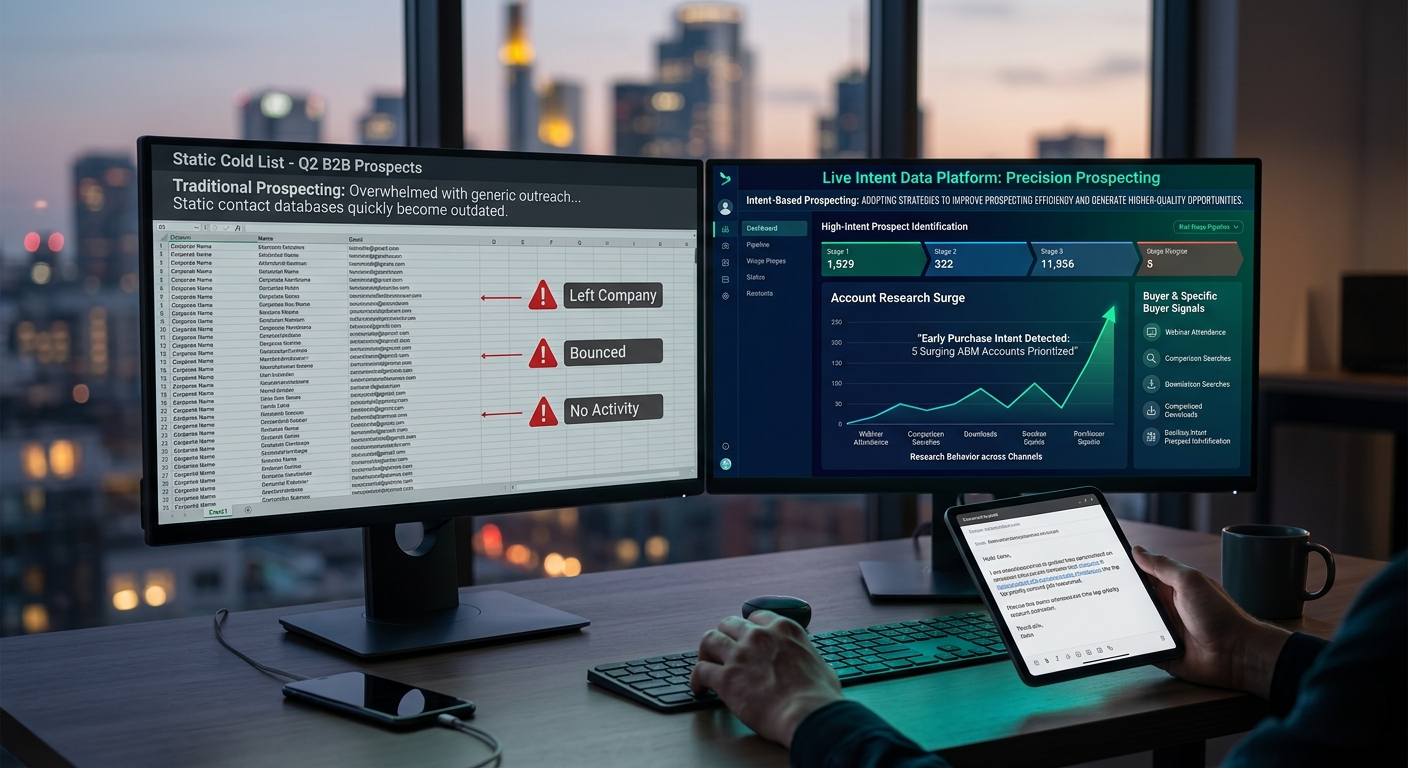
Traditional cold prospecting is becoming less effective in modern B2B sales. Buyers are overwhelmed with generic outreach, static contact databases quickly become outdated, and mass email campaigns often generate low response rates. Today’s buyers expect relevance, timing, and personalization. That shift is why more companies are adopting intent based marketing strategies to improve prospecting efficiency and generate higher-quality opportunities. Instead of relying on static lists filled with contacts who may have no interest in buying, intent-based prospecting focuses on identifying accounts actively researching solutions right now. By leveraging buyer signals, behavioral data, and real-time engagement insights, businesses can engage prospects earlier, improve outreach quality, and create stronger sales conversations. Why Traditional Cold Lists Are Losing Effectiveness The limitations of static prospect databases Cold lists are built around firmographic filters such as industry, company size, revenue, or job title. While this information helps define target accounts, it does not indicate actual buying intent. A prospect may perfectly match your ideal customer profile but have no current interest in purchasing. Static databases also become outdated quickly due to employee turnover, changing priorities, and evolving business needs. Why volume-based prospecting creates lower-quality conversations Many outbound teams still rely on volume-heavy outreach strategies. The assumption is simple: send enough emails and eventually someone will respond. The problem is that buyers increasingly ignore irrelevant outreach. Without behavioral context, sales teams often contact prospects at the wrong time with generic messaging that fails to connect. Understanding the modern intent-based marketing definition Intent based marketing uses behavioral insights to identify prospects actively researching products, services, or solutions. Instead of relying solely on who a company is, intent-based strategies focus on what buyers are actually doing online. This includes behaviors such as: Visiting solution pages Reading comparison content Researching competitors Downloading resources Attending webinars Engaging with industry topics These actions reveal active buying interest. The shift from mass outreach to buyer-intent targeting Modern prospecting is moving away from broad targeting and toward precision engagement. Companies now prioritize prospects showing signs of active demand instead of relying on large contact lists with little buying context. What Makes Intent-Based Prospecting Different? How B2B buyer intent data improves prospect targeting B2B buyer intent data provides visibility into prospect behavior across digital channels. Instead of guessing which accounts may be interested, businesses can identify organizations already researching relevant topics. This dramatically improves targeting accuracy. The role of purchase intent signals in identifying active buyers Purchase intent signals help determine whether a prospect is moving through the buying journey. Common signals include: Pricing page visits Product comparison research High-frequency content engagement Repeated website sessions Demo-related searches These signals reveal stronger purchasing interest than static demographic data alone. Why intent-driven prospecting focuses on timing and relevance Intent-based prospecting prioritizes engaging buyers at the right moment. Timing often determines whether outreach feels valuable or disruptive. Using buyer signals instead of generic contact lists Behavioral insights allow sales teams to focus on active opportunities instead of blindly contacting large lists of passive prospects. How Buyer Signals Reveal In-Market Opportunities Understanding digital buyer signals across channels Modern buyers leave digital intent clues across multiple channels, including: Websites Review platforms Social media Industry forums Search activity Webinar engagement Content downloads Each interaction contributes to a larger picture of buyer readiness. Using real-time buyer behavior tracking to identify engagement patterns Real-time tracking helps businesses monitor behavioral changes as they happen. Sudden increases in engagement often indicate growing urgency or active evaluation. Detecting active research behavior before outreach begins Intent data allows teams to identify demand before prospects directly contact sales. This creates earlier outreach opportunities. Recognizing when prospects are entering buying cycles Repeated engagement with solution-focused content often signals that a buyer is entering an active purchasing phase. Early Purchase Intent Detection Creates Competitive Advantage Why early purchase intent detection matters in outbound sales The earlier a company identifies buying intent, the more influence it can have during the decision-making process. Late outreach often means competing against established vendor preferences. Using account intent monitoring to identify demand sooner Account intent monitoring tracks engagement patterns across organizations to detect rising interest levels. This helps sales teams prioritize accounts showing active buying behavior. Reaching prospects before competitors recognize the opportunity Early visibility creates a significant competitive advantage. Companies that engage first often shape buyer perception earlier in the journey. Turning research activity into proactive outreach campaigns Intent-based prospecting transforms outreach from reactive selling into proactive engagement. High-Intent Prospect Identification vs Cold List Prospecting Improving high-intent prospect identification through behavioral data Behavioral insights reveal which accounts are most likely to convert. This improves prospect prioritization and outreach efficiency. The difference between broad targeting and intent-based prioritization Cold list prospecting prioritizes account fit. Intent-based prospecting prioritizes account readiness. That distinction dramatically improves conversion potential. Applying behavioral targeting in B2B marketing for smarter outreach Behavioral targeting focuses on real engagement patterns instead of assumptions. This creates more relevant prospecting strategies. Reducing wasted outreach with intent-qualified accounts Sales teams spend less time contacting uninterested prospects and more time engaging buyers already showing demand. Timing Outbound Campaigns Around Buyer Intent Why timing outbound campaigns impacts response rates Even strong messaging can fail if delivered at the wrong moment. Buyers respond more positively when outreach aligns with active research behavior. Using predictive marketing strategies to improve engagement timing Predictive intent models help identify optimal outreach windows based on engagement activity. Aligning outreach with active buyer research windows Intent-based timing ensures outreach reaches prospects while interest and urgency are highest. Increasing reply quality through intent-driven timing Better timing improves both response rates and conversation quality. Personalized Outreach Using Buyer Intent Signals Building personalized outreach using buyer intent insights Intent data enables outreach tailored around actual buyer interests. This creates far more relevant communication. Moving beyond surface-level personalization tactics Modern personalization requires more than simply adding a prospect’s name or company. Behavioral context matters far more. Creating context-aware messaging based on buyer behavior Outreach can reference: Research topics Industry challenges Competitor comparisons Product interests Engagement patterns This creates

How Modern B2B Buyers Leave Digital Intent Clues Everywhere

Modern B2B buyers rarely start their purchasing journey by speaking directly with a sales representative. Instead, they spend weeks—or even months—researching solutions online, comparing vendors, consuming content, attending webinars, and engaging with industry discussions before ever filling out a form. Every one of those actions leaves behind digital intent clues. For companies embracing intent based marketing, these behavioral signals have become one of the most valuable assets in modern sales and marketing. Instead of relying on cold outreach and static prospect lists, businesses can now identify active buyers earlier, understand what they care about, and engage them at the right moment. As competition increases across B2B industries, the ability to recognize and act on buyer intent signals is quickly becoming a major competitive advantage. Why Timing Is the Missing Piece in Modern B2B Marketing Understanding the modern intent-based marketing definition At its core, intent based marketing is the practice of using behavioral data to identify prospects actively researching products, services, or solutions. Rather than targeting accounts solely based on demographics or firmographics, intent-based strategies focus on real buyer behavior. This includes actions such as: Reading industry content Visiting pricing pages Downloading comparison guides Researching competitors Attending webinars Repeatedly engaging with relevant topics These digital activities reveal where prospects are in the buying journey and how likely they are to make a purchasing decision. Why today’s buyers research long before speaking with sales Modern buyers prefer independent research. Most decision-makers want to understand available solutions, compare vendors, and validate potential investments before engaging with sales teams. This means companies that wait for inbound inquiries often enter the conversation too late. By the time a prospect requests a demo, they may already have a shortlist of vendors in mind. Intent data helps sales teams identify that buying activity much earlier. The shift from cold prospecting to behavior-driven targeting Traditional prospecting often depends on mass outreach campaigns with little context behind them. Intent-based marketing changes that approach by prioritizing accounts already showing signs of interest. Instead of asking, “Who fits our ICP?” companies now ask: “Who is actively researching solutions right now?” That shift dramatically improves targeting precision. How digital intent signals create a competitive advantage Timing matters in B2B sales. Organizations that detect buyer interest early can engage prospects before competitors recognize the opportunity. This creates advantages such as: Higher response rates Better conversations Stronger personalization Shorter sales cycles Improved conversion efficiency What Are Digital Buyer Intent Clues? Understanding B2B buyer intent data and online behavior patterns B2B buyer intent data refers to behavioral insights collected from digital interactions across websites, content platforms, communities, and third-party sources. These behaviors reveal what prospects are researching and how urgently they may be evaluating solutions. The role of purchase intent signals in identifying active demand Purchase intent signals help companies identify when a buyer is moving beyond casual interest into active evaluation mode. Examples include: Increased visits to pricing pages Product comparison research Competitor-related searches Demo-related content consumption Repeated engagement with solution-focused topics These signals help revenue teams focus on accounts more likely to convert. How buyer signals reveal interest, urgency, and buying readiness Not all engagement means the same thing. A single blog visit may indicate curiosity. But repeated visits, combined with webinar attendance and pricing page activity, suggest much stronger buying intent. Behavioral intensity often reveals urgency. Why digital behavior is reshaping outbound lead generation Outbound sales is no longer just about volume. Modern teams prioritize relevance and timing. Intent data enables SDRs and marketers to focus on buyers actively researching solutions rather than randomly targeting large prospect lists. Where Modern Buyers Leave Intent Signals Online Website visits, repeat sessions, and content engagement Company websites remain one of the strongest sources of first-party intent data. High-value actions include: Multiple page visits Long session durations Resource downloads Product-focused engagement Returning visitors These patterns often reveal growing buyer interest. Third-party research activity and comparison behavior Buyers also leave intent clues across review platforms, forums, analyst sites, and industry publications. Researching comparisons between vendors is often a strong buying signal. Webinar attendance, downloads, and community participation Educational engagement frequently indicates active evaluation. Prospects attending webinars, downloading technical guides, or participating in niche communities are often moving deeper into the buying journey. Social engagement and industry content consumption patterns Social activity can also reveal intent. Buyers who consistently engage with industry trends, competitor announcements, or educational content may be actively exploring solutions. Real-Time Buyer Behavior Tracking and Prospect Readiness Using real-time buyer behavior tracking to identify active buyers Real-time tracking allows businesses to monitor behavioral changes as they happen. Instead of relying on outdated lead data, companies can identify accounts actively researching solutions right now. Detecting spikes in engagement across digital channels Sudden increases in engagement often signal urgency. Examples include: Sharp increases in website visits Multiple employees researching simultaneously High-frequency content engagement Rapid increases in comparison research These spikes typically indicate growing purchase readiness. Understanding urgency through behavioral patterns Intent data is most powerful when analyzed over time. Patterns reveal whether prospects are casually browsing or actively preparing to buy. Recognizing when prospects move from curiosity to buying intent The transition from awareness to active evaluation is where timing becomes critical. Organizations that identify this shift early can engage prospects before competitors do. Early Purchase Intent Detection Gives Sales Teams an Edge Why early purchase intent detection matters in competitive markets The earlier a company identifies demand, the more influence it has over the buying process. Waiting too long often means competing against established vendor preferences. Using account intent monitoring to identify demand before competitors do Account intent monitoring tracks engagement across target organizations to uncover rising interest. This allows sales teams to prioritize accounts showing active buying behavior. Engaging buyers earlier in the research process Early engagement helps companies shape buyer perception before shortlists are finalized. This can significantly improve win probability. Turning behavioral clues into proactive outbound opportunities Intent signals transform outbound sales from reactive prospecting into proactive engagement. Instead of interrupting buyers,

What Buyer Intent Signals Reveal About Your Prospects

Why Timing Is the Missing Piece in Modern B2B Marketing Modern B2B buyers do not wait for sales teams to educate them anymore. Most prospects conduct extensive research long before responding to outreach or booking a demo. This shift has made timing one of the most important factors in modern sales and marketing success. Companies that understand buyer behavior early gain a major advantage over competitors still relying on static prospect lists and broad outbound campaigns. Understanding the modern intent-based marketing definition Intent based marketing refers to the process of using buyer behavior signals to identify prospects actively researching solutions, products, or services. Instead of relying only on firmographic data such as company size or industry, intent based marketing focuses on real buyer activity. This includes actions like: Reading industry content Comparing vendors Visiting pricing pages Downloading reports Searching for solution-specific keywords Attending webinars or product events These signals provide insight into when buyers may be entering a purchasing cycle. Why relevance without timing still fails in outbound sales Even highly personalized outreach can fail if the timing is wrong. A prospect who is not actively researching a problem is unlikely to prioritize a sales conversation regardless of how relevant the message appears. This is why timing and relevance must work together. Sales teams that contact buyers during active research periods often see: Higher response rates Better conversation quality Faster qualification Shorter sales cycles Without timing, personalization alone becomes far less effective. The relationship between buyer readiness and campaign performance Campaign performance improves significantly when outreach aligns with buyer readiness. Prospects showing strong engagement patterns are typically more open to conversations because the problem already exists internally. Buyer readiness can often be identified through: Increased website activity Repeat visits to product pages Competitive comparison research Higher content engagement frequency Multi stakeholder engagement from the same account These indicators help outbound teams focus resources on opportunities with stronger conversion potential. How timing creates a competitive advantage in B2B outreach In competitive markets, the company that engages first often shapes the buying conversation. Intent data helps organizations detect demand before competitors notice it. This creates advantages such as: Earlier relationship building Better positioning during evaluation stages Increased trust through relevance Higher probability of influencing requirements Timing is no longer just an operational factor. It has become a strategic advantage in B2B growth. What Buyer Intent Signals Reveal About Timing Buyer intent signals reveal where prospects are in their research journey. More importantly, they help teams determine when outreach should happen. Understanding B2B buyer intent data and buying-stage behavior B2B buyer intent data tracks digital behaviors that indicate interest in a particular category or solution. These behaviors reveal different stages of the buyer journey. For example: Educational content consumption often signals early stage awareness Product comparisons indicate active evaluation Pricing page engagement may suggest buying readiness Understanding these stages allows sales teams to adjust outreach strategies accordingly. The role of purchase intent signals in predicting readiness Purchase intent signals help identify whether a prospect is simply researching or actively considering a purchase decision. Common purchase intent signals include: Frequent searches around a specific solution category Engagement with competitor content Research spikes from key accounts Increased activity from multiple stakeholders These indicators improve targeting accuracy and help prioritize accounts more effectively. Using buyer signals to identify active research windows Research windows are periods when buyers are actively gathering information and evaluating vendors. These windows create ideal opportunities for outbound engagement. Intent data helps identify these windows by monitoring: Content consumption frequency Topic specific engagement Research consistency over time Cross channel activity patterns Outreach during active windows often generates significantly better engagement. Leveraging real-time buyer behavior tracking for faster engagement Real-time buyer behavior tracking allows sales teams to react quickly when intent activity increases. Instead of waiting weeks to engage, teams can launch outreach immediately after detecting buying signals. This responsiveness improves: Outreach relevance Timing accuracy Competitive positioning Conversion efficiency Real-time insights allow outbound teams to operate proactively instead of reactively. Early Purchase Intent Detection Changes Everything Why early purchase intent detection matters in competitive industries Early purchase intent detection gives companies visibility into opportunities before competitors recognize them. This creates more time to build relationships and shape buyer perception. Early engagement often leads to: Stronger trust Higher response rates Better positioning Increased deal influence Using account intent monitoring to identify opportunities sooner Account intent monitoring tracks engagement activity at the company level instead of focusing solely on individuals. This helps identify: Emerging demand across departments Growing interest from buying committees Organization wide research trends Monitoring accounts holistically improves prospect prioritization and campaign planning. Engaging buyers before competitors recognize demand Many companies wait until prospects request demos or inbound consultations before reaching out. By that stage, buyers may already be deep into vendor evaluations. Intent based marketing allows teams to engage earlier when buyers are still shaping their preferences. This creates opportunities to: Influence buying criteria Establish expertise Build stronger relationships Increase win probability Turning research behavior into proactive outbound opportunities Research behavior contains valuable buying signals. Companies that analyze this behavior effectively can transform passive data into active pipeline opportunities. Examples include: Launching outreach after engagement spikes Prioritizing accounts researching competitors Aligning messaging with current buyer interests This makes outbound efforts far more strategic and efficient. Timing Outbound Campaigns Around Buyer Behavior Why timing outbound campaigns directly impacts response rates Outreach timing affects whether a prospect sees a message as valuable or disruptive. Prospects already researching a problem are naturally more receptive to relevant conversations. This is why timing outbound campaigns properly often improves: Open rates Reply rates Meeting conversions Sales acceptance rates Using predictive marketing strategies to improve outreach timing Predictive marketing strategies use historical behavior patterns and intent signals to forecast buying readiness. These models help teams identify: When accounts are most likely to engage Which buyers should be prioritized Where outreach timing should shift Predictive insights improve campaign precision significantly. Reaching buyers while intent and urgency are highest Intent signals

What Buyer Intent Signals Reveal About Your Prospects

Modern B2B buyers leave behind a massive amount of digital behavior before they ever speak to a sales representative. They research products, compare vendors, read industry content, attend webinars, visit websites, and evaluate solutions across multiple channels. Every one of these actions creates valuable signals about buyer interest and purchasing intent. For sales and marketing teams, understanding these signals has become increasingly important. Traditional prospecting methods built around static lead lists and broad targeting no longer provide enough visibility into buyer readiness. Companies now need deeper insight into who is actively researching solutions, what problems they are trying to solve, and when they are most likely to engage. This is where intent based marketing plays a major role. Buyer intent signals help organizations identify active opportunities earlier, personalize outreach more effectively, improve qualification accuracy, and prioritize accounts showing real buying activity. As competition continues increasing across B2B industries, companies that understand buyer behavior are gaining a significant advantage in pipeline generation and outbound efficiency. What Are Buyer Intent Signals in B2B Sales? Understanding the intent-based marketing definition The intent-based marketing definition refers to the practice of using behavioral data and buyer activity signals to identify potential customers who are actively researching products or services. Instead of relying only on demographic information or firmographic fit, intent based marketing focuses on actual buyer behavior. This approach allows sales and marketing teams to identify purchase readiness more accurately. The role of B2B buyer intent data in modern prospecting B2B buyer intent data provides insight into how prospects behave across digital channels. It helps organizations understand which accounts are actively researching specific topics, products, or business challenges. Examples of intent activity include: Product page visits Whitepaper downloads Webinar attendance Competitor research Content engagement Search activity These behaviors help reveal buyer interest long before direct conversations happen. How buyer signals reflect real purchasing interest Buyer signals often indicate where a prospect is within the buying journey. Consistent engagement across multiple channels usually suggests stronger purchase intent than isolated activity. Why intent data matters more than static demographics Firmographic information may reveal whether a company fits your ideal customer profile, but it does not indicate current buying readiness. Intent data adds real behavioral context to prospecting decisions. Why Buyer Signals Matter More Than Ever The shift from broad targeting to intent-driven lead generation Modern B2B sales is shifting away from mass outreach toward intent-driven lead generation strategies focused on relevance and timing. Why modern buyers reveal intent before speaking to sales Today’s buyers often complete a significant portion of their research process independently before engaging vendors. This means companies must identify intent signals earlier if they want to influence decisions. How buyer behavior creates a competitive advantage Organizations that understand buyer behavior can prioritize outreach more effectively and engage prospects before competitors recognize the opportunity. Using intent insights to improve sales efficiency and targeting Intent insights improve outbound efficiency by helping teams focus resources on accounts showing genuine buying activity. The Different Types of Purchase Intent Signals Understanding explicit vs implicit purchase intent signals Purchase intent signals generally fall into two categories: Explicit signals include actions such as: Requesting demos Filling out forms Contacting sales directly Implicit signals include behaviors such as: Reading multiple product pages Researching competitors Consuming industry content Both signal types help organizations evaluate buyer readiness. Website activity and content engagement patterns Website engagement patterns often reveal growing interest. Repeat visits to pricing pages or solution pages may indicate increasing purchase intent. Research behavior across third-party platforms Prospects also reveal buying behavior through third-party research activity across review sites, industry publications, and comparison platforms. Social engagement, webinar activity, and comparison research Social interactions, webinar participation, and product comparisons provide additional insight into buyer interests and evaluation stages. Real-Time Buyer Behavior Tracking and Prospect Readiness Using real-time buyer behavior tracking to identify active interest Real-time buyer behavior tracking helps organizations monitor engagement as it happens, allowing teams to respond faster to emerging opportunities. Recognizing urgency through engagement spikes Sudden increases in research activity often indicate growing urgency or buying momentum. Tracking repeat visits and research intensity Repeated engagement across multiple channels usually reflects deeper buyer interest than isolated interactions. Identifying patterns that indicate buying readiness Behavioral patterns help sales teams identify when prospects are entering active evaluation stages. Early Purchase Intent Detection and Competitive Advantage Why early purchase intent detection matters in B2B sales Early purchase intent detection allows organizations to identify opportunities before competitors engage the account. Using account intent monitoring to identify opportunities sooner Account intent monitoring helps teams track account-level research spikes and topic engagement. Engaging prospects before competitors recognize demand The earlier a company enters the conversation, the greater the opportunity to shape the buying process. Turning buyer signals into proactive outreach strategies Buyer signals help outbound teams move from reactive prospecting to proactive engagement. What Buyer Signals Reveal About Prospect Priorities Identifying pain points through behavioral analysis Research behavior often reveals the business challenges prospects are trying to solve. Understanding solution preferences based on research activity The types of content buyers consume can indicate preferred solution categories and evaluation criteria. Using behavioral targeting in B2B marketing to improve messaging Behavioral targeting improves messaging relevance by aligning communication with demonstrated buyer interests. Aligning outreach with prospect interests and buying stage Different research behaviors often correspond with different buying stages, allowing sales teams to tailor outreach accordingly. High-Intent Prospect Identification Using Buyer Signals Methods for high-intent prospect identification High-intent prospect identification combines engagement signals, research activity, and account behavior patterns. Key indicators often include: Multiple stakeholder engagement Increased research frequency Product comparison activity Returning website visits High-value content downloads Distinguishing curious visitors from active buyers Not all engagement signals indicate purchase intent. Strong qualification requires evaluating consistency and depth of engagement. Prioritizing outreach based on engagement intensity Accounts showing stronger engagement patterns should receive higher outbound priority. Improving outbound efficiency through smarter qualification Smarter qualification helps SDR teams spend more time on accounts likely to convert. Timing Outbound Campaigns Around

Why Intent-Based Marketing Is Becoming Essential in B2B Sales

B2B sales has changed dramatically over the last decade. Buyers are more informed, decision making cycles are more complex, and traditional outreach strategies are becoming less effective. Sales teams can no longer rely solely on static prospect lists, cold outreach volume, or generic messaging to generate pipeline consistently. This shift is one of the main reasons intent based marketing has become increasingly important in modern B2B growth strategies. Instead of guessing which companies may eventually need a solution, intent based marketing helps organizations identify buyers actively researching products, services, and business problems in real time. By using buyer behavior signals and intent data, sales and marketing teams can prioritize outreach, improve timing, personalize communication, and engage accounts before competitors do. As competition continues increasing across nearly every B2B market, companies that leverage buyer intent effectively are gaining a major advantage in pipeline generation and revenue growth. The Shift Happening in Modern B2B Sales Why traditional prospecting methods are losing effectiveness Traditional prospecting strategies often rely on broad targeting and high outreach volume. SDR teams may send thousands of emails or calls each month without knowing whether prospects are actively interested in solving a problem. This creates several common challenges: Lower response rates Higher acquisition costs Longer sales cycles Weak pipeline quality Wasted outbound effort Modern buyers expect relevance and timing. Generic outreach no longer performs the way it once did. Understanding the modern intent-based marketing definition The modern intent-based marketing definition centers around identifying and acting on buyer behavior signals that indicate potential purchase interest. These signals help organizations understand which accounts are actively researching solutions before direct engagement happens. Instead of relying only on demographics or firmographics, sales teams gain insight into real buyer activity. The growing importance of buyer timing and relevance In B2B sales, timing has become one of the most important competitive advantages. Outreach that arrives during active research periods is far more likely to generate engagement than outreach sent at random. Intent data improves timing by revealing when buyers are entering evaluation stages. How buyer behavior is reshaping outbound and inbound sales strategies Buyer behavior now influences almost every aspect of modern revenue generation. Both outbound and inbound teams increasingly rely on behavioral insights to improve targeting, messaging, and prioritization. What Intent Data Reveals About Modern Buyers Understanding B2B buyer intent data and digital research patterns B2B buyer intent data captures digital behaviors that suggest active interest in specific products, services, or business topics. These patterns help organizations understand what buyers are researching and when interest is increasing. Examples include: Reading industry articles Visiting product pages Downloading reports Comparing vendors Engaging with webinars Researching competitors The role of purchase intent signals in identifying active demand Purchase intent signals help sales teams distinguish between passive interest and genuine buying activity. These signals allow organizations to prioritize accounts more strategically. Using buyer signals to uncover hidden sales opportunities Many companies actively research solutions long before speaking with vendors directly. Buyer signals reveal these hidden opportunities earlier in the buying process. Leveraging real-time buyer behavior tracking for smarter targeting Real-time buyer behavior tracking enables teams to respond quickly to changes in account activity and research intensity. Why Intent-Based Marketing Creates a Competitive Advantage How intent insights help sales teams reach buyers earlier The earlier a company engages an active buyer, the greater the opportunity to shape the buying process before competitors enter the conversation. Improving response rates through better timing and relevance Intent-informed outreach performs better because it aligns with actual buyer interests and current priorities. Why companies using intent data outperform reactive prospecting teams Reactive prospecting waits for buyers to raise their hands. Intent-based marketing enables proactive engagement before opportunities become obvious. Building a sustainable competitive advantage with buyer intelligence Buyer intelligence improves over time, allowing organizations to refine targeting models, messaging strategies, and qualification processes continuously. Early Purchase Intent Detection Is Changing Outbound Sales Why early purchase intent detection matters in B2B prospecting Early purchase intent detection helps sales teams identify buyers before formal evaluations begin. Using account intent monitoring to identify buying activity sooner Account intent monitoring allows organizations to track surges in research behavior across target accounts. Engaging prospects before competitors recognize demand Companies that engage earlier often gain stronger positioning throughout the sales process. Turning research behavior into proactive outreach opportunities Behavioral signals help outbound teams move from reactive prospecting toward predictive engagement models. High-Intent Prospect Identification Improves Pipeline Quality Strategies for high-intent prospect identification High-intent prospect identification combines behavioral insights with account qualification criteria. Strong indicators often include: Repeated content engagement Increased research activity Multiple stakeholders researching similar topics Product comparison behavior Returning website visits Moving beyond static lead lists and outdated qualification methods Static lists provide little visibility into actual buyer readiness. Applying behavioral targeting in B2B marketing for better precision Behavioral targeting improves campaign accuracy by aligning outreach with demonstrated interests. Reducing wasted outreach through smarter prospect prioritization Sales teams become more productive when they focus on accounts showing active buying signals. Timing Outbound Campaigns Around Buyer Signals Why timing outbound campaigns impacts conversion rates Even highly personalized outreach can fail if timing is wrong. Buyers are most responsive during active research periods. Using predictive marketing strategies to improve outreach timing Predictive marketing strategies help teams identify optimal outreach windows based on behavioral patterns. Aligning sales engagement with active research behavior Intent data allows SDRs to coordinate outreach with live account activity. Increasing response quality through intent-informed outreach Better timing improves conversation quality, engagement rates, and conversion efficiency. Personalized Outreach Using Buyer Intent Building personalized outreach using buyer intent data Intent data helps sales teams personalize outreach around actual buyer interests instead of assumptions. Moving beyond generic personalization tactics Modern personalization goes far beyond adding a company name to an email. Buyers expect contextual relevance. Creating contextual messaging based on buyer interests Effective outreach reflects the topics, challenges, and solutions buyers are already researching. Improving engagement through relevance-driven communication Relevant communication increases trust and improves outbound engagement quality significantly.

How Intent-Based Marketing Supports Outbound Lead Generation

Outbound lead generation has changed significantly over the past few years. Traditional cold outreach methods that relied heavily on broad prospect lists and high email volume are becoming less effective in modern B2B environments. Buyers are more informed, competition is stronger, and decision makers expect personalized outreach that aligns with their actual business needs and timing. This shift has increased the importance of intent based marketing. Instead of relying on assumptions, intent based marketing helps sales teams identify accounts actively researching solutions before direct conversations begin. By analyzing buyer behavior, engagement patterns, and research activity, outbound teams can improve targeting, personalize outreach, and prioritize the right opportunities at the right time. For modern SDR and outbound teams, intent data is no longer just an advantage. It is becoming a core part of scalable pipeline generation. Why Outbound Lead Generation Needs to Evolve The limitations of traditional cold outreach strategies Traditional outbound strategies often focus on activity volume rather than buyer readiness. SDRs may contact hundreds of prospects each week without knowing whether those companies are actively evaluating solutions. This creates several problems: Low response rates Poor conversion efficiency Wasted outreach effort Longer sales cycles Higher acquisition costs Modern buyers expect outreach that feels relevant and timely, not generic. Understanding the modern intent-based marketing definition Intent based marketing refers to the process of using behavioral data and buyer signals to identify companies actively researching products or services. These signals help outbound teams understand which prospects are showing genuine interest before direct engagement happens. Rather than guessing who might be interested, sales teams can prioritize accounts demonstrating active buying behavior. Why outbound teams need better timing and targeting Even strong messaging struggles when outreach timing is wrong. Buyers who are not actively researching solutions are far less likely to engage in meaningful conversations. Intent data improves both timing and targeting by helping SDRs focus on accounts currently showing purchase intent signals. How intent data creates a competitive advantage in outbound sales The earlier a sales team identifies active demand, the greater the chance of entering the buying process before competitors. Intent data gives outbound teams visibility into emerging opportunities that would otherwise remain hidden. What Intent Data Reveals About Buyers Understanding B2B buyer intent data and buyer research behavior B2B buyer intent data captures digital activities that suggest a company may be exploring a solution category. This includes behaviors such as: Reading product-related content Visiting comparison pages Downloading technical resources Engaging with competitor research Attending webinars or events These actions reveal where buyers are in their research process. The role of purchase intent signals in outbound prospecting Purchase intent signals help SDRs determine whether a prospect is likely entering an active buying cycle. Instead of relying purely on firmographics, outbound teams gain visibility into real-time interest levels. Using buyer signals to uncover active demand Buyer signals provide insight into accounts that are actively researching solutions but have not yet reached out directly. This creates opportunities for proactive outbound engagement. Leveraging real-time buyer behavior tracking for smarter outreach Real-time buyer behavior tracking allows teams to monitor shifts in account activity. Sudden spikes in engagement often indicate growing purchase intent and should trigger outbound action quickly. Intent-Driven Lead Generation vs Traditional Prospecting How intent-driven lead generation improves outreach precision Traditional prospecting often treats all accounts equally. Intent-driven lead generation prioritizes companies based on actual buyer behavior. This improves: Outreach relevance SDR efficiency Meeting quality Pipeline accuracy The difference between static lists and intent-qualified accounts Static prospect lists quickly become outdated because they lack behavioral context. Intent-qualified accounts continuously evolve based on live engagement activity. Why intent-based outbound focuses on relevance over volume Modern outbound success depends less on sending more messages and more on delivering relevant outreach to buyers already showing interest. Comparing conversion quality between traditional and intent-driven outreach Intent-based outbound campaigns typically generate stronger conversations because outreach aligns with active buyer interest and timing. Early Purchase Intent Detection in Outbound Sales Why early purchase intent detection matters in competitive markets The earlier a sales team identifies buyer interest, the greater the opportunity to shape the buying process before competitors engage. Using account intent monitoring to identify research activity early Account intent monitoring helps outbound teams identify research spikes across target accounts. This visibility allows SDRs to prioritize outreach more strategically. Engaging buyers before competitors enter the conversation Many deals are influenced long before formal evaluations begin. Early engagement creates stronger positioning and trust. Building proactive outbound workflows around buyer behavior Modern outbound workflows increasingly rely on behavioral triggers instead of static prospecting schedules. High-Intent Prospect Identification for SDR Teams Techniques for high-intent prospect identification Effective high-intent prospect identification combines multiple factors, including: Research frequency Content engagement depth Topic relevance Stakeholder activity Historical buying patterns Applying behavioral targeting in B2B marketing to outbound campaigns Behavioral targeting allows outbound teams to tailor campaigns around actual buyer interests instead of assumptions. Prioritizing outreach toward accounts showing active buying intent Prioritization helps SDRs focus their effort on accounts with the highest conversion probability. Reducing wasted prospecting effort with smarter qualification Intent data reduces time spent chasing low-intent accounts, improving productivity and outbound efficiency. Timing Outbound Campaigns Around Buyer Signals Why timing outbound campaigns impacts reply and conversion rates Even highly personalized outreach performs poorly if buyers are not actively evaluating solutions. Timing is often the difference between ignored outreach and meaningful engagement. Using predictive marketing strategies to improve outreach timing Predictive marketing strategies analyze behavioral patterns to determine optimal outreach windows. Aligning cold email and call sequences with buying behavior Outbound teams can trigger campaigns based on real research activity instead of arbitrary schedules. Increasing engagement by reaching prospects at the right moment Relevance increases significantly when outreach aligns with buyer urgency and active demand. Personalized Outreach Using Buyer Intent Building personalized outreach using buyer intent insights Intent data enables SDRs to personalize messaging around actual buyer interests, pain points, and research activity. Creating context-aware messaging for outbound campaigns Context-aware outreach feels more relevant because

Intent-Based Marketing Metrics: How to Measure Success

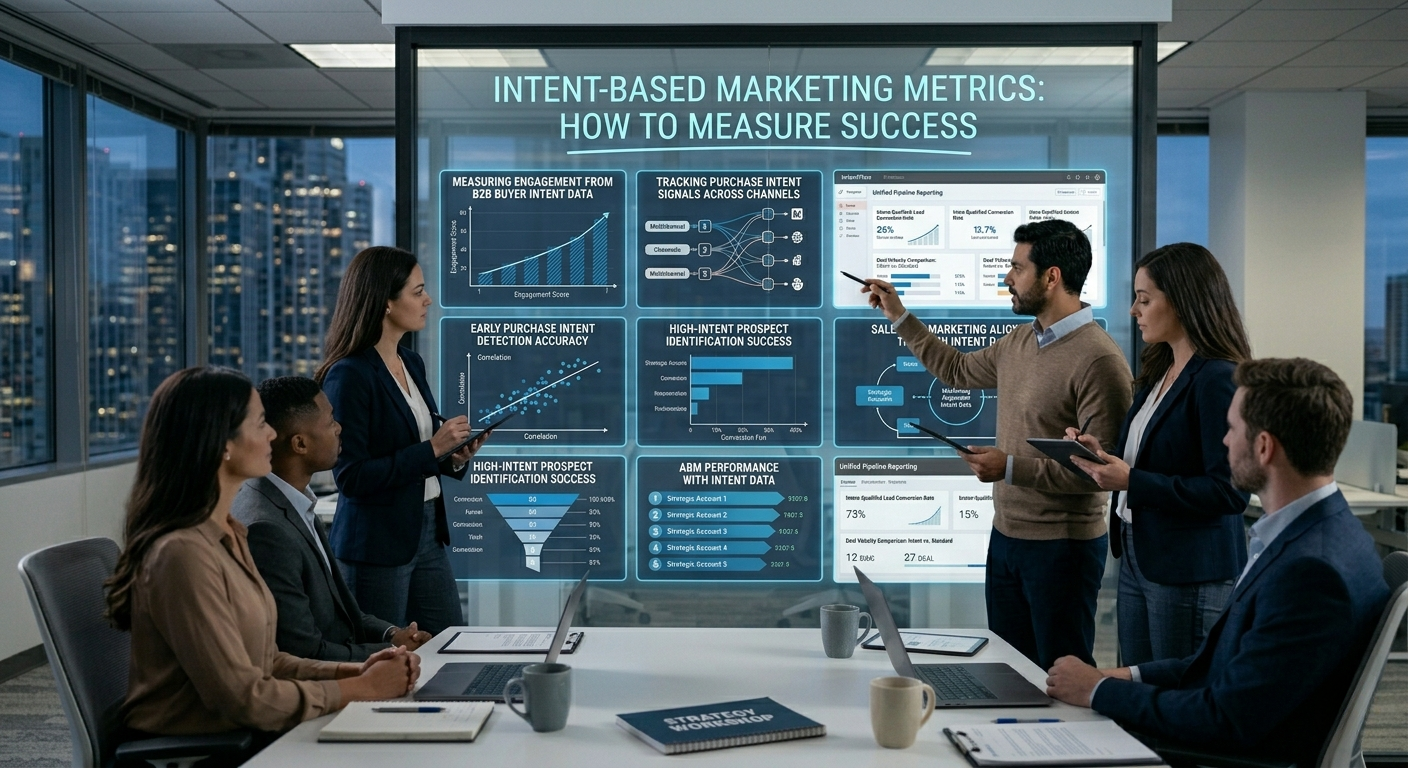
As more B2B companies adopt intent based marketing, the focus is shifting from simply generating leads to understanding buyer readiness and purchase behavior. Traditional demand generation often relies on broad targeting, high outreach volume, and surface-level engagement metrics. However, modern revenue teams need deeper visibility into which accounts are actively researching solutions and moving toward a buying decision. This is where intent data changes the game. Intent based marketing allows sales and marketing teams to identify behavioral signals that indicate real buying interest. But collecting intent data alone is not enough. Companies also need a reliable way to measure whether their intent strategies are actually improving pipeline quality, conversion rates, and sales efficiency. Understanding the right metrics is essential for turning buyer intelligence into predictable revenue growth. Why Measuring Intent-Based Marketing Matters Understanding the intent-based marketing definition from a performance perspective At its core, intent based marketing focuses on identifying buyer behavior that signals active interest in a product or solution. This includes content consumption, keyword research, product comparisons, webinar participation, and other forms of digital engagement. From a measurement standpoint, intent based marketing is not simply about collecting more data. It is about using behavioral insights to improve targeting, timing, personalization, and sales prioritization. Why traditional lead generation metrics are no longer enough Traditional metrics such as impressions, clicks, and raw lead volume often fail to reveal actual buying readiness. A large number of leads may look impressive on paper, but if those prospects are not actively researching solutions, sales teams waste time pursuing low quality opportunities. Modern B2B teams increasingly prioritize metrics such as: Buying intent strength Engagement depth Sales readiness Account activity trends Pipeline contribution These metrics provide a much clearer picture of revenue potential. The connection between buyer signals and revenue outcomes Strong buyer signals often correlate with faster sales cycles, higher conversion rates, and improved deal velocity. Measuring how these signals influence revenue outcomes helps organizations understand which activities truly impact pipeline generation. How intent measurement creates long-term competitive advantage Companies that measure buyer intent effectively can engage prospects earlier than competitors. This creates a significant advantage in crowded B2B markets where timing and relevance heavily influence deal outcomes. The Core Metrics Every Intent-Based Marketing Strategy Should Track Measuring engagement from B2B buyer intent data One of the most important metrics in intent based marketing is engagement quality. Instead of tracking simple website visits, companies should measure deeper interactions such as: Time spent on high-intent pages Repeat visits from target accounts Engagement with pricing or product content Webinar attendance and follow-up activity These actions reveal stronger buying interest than surface-level interactions. Tracking purchase intent signals across channels Intent signals appear across multiple channels including websites, review platforms, LinkedIn activity, email engagement, and third-party content consumption. Tracking cross-channel behavior creates a more complete view of buyer intent. Evaluating lead quality instead of lead volume High quality leads generate meaningful conversations and move through the pipeline faster. Measuring lead quality helps teams avoid overvaluing quantity-based metrics. Monitoring conversion trends throughout the buyer journey Intent based marketing should improve conversion rates at every stage of the funnel. Teams should monitor: Lead-to-meeting conversion Meeting-to-opportunity conversion Opportunity-to-close rates Pipeline velocity These metrics reveal whether intent signals are improving sales performance. Measuring Buyer Signals and Engagement Quality Identifying the most valuable buyer signals Not all buyer signals carry equal weight. Reading a single blog article is far less significant than comparing vendors or downloading technical documentation. High value buyer signals often include: Pricing page visits Product demo requests Competitor comparison research Case study engagement Technical resource downloads Using real-time buyer behavior tracking to monitor intent activity Real-time buyer behavior tracking allows teams to identify sudden spikes in account activity. This helps SDRs and sales reps engage prospects while interest levels are high. Measuring engagement depth instead of surface-level interactions Surface metrics like opens and clicks rarely tell the full story. Teams should evaluate engagement depth by analyzing content paths, session frequency, and behavioral consistency across multiple touchpoints. Tracking content consumption and research behavior patterns Intent measurement becomes more powerful when organizations identify recurring research patterns tied to purchase readiness. This helps improve forecasting and qualification accuracy. Early Purchase Intent Detection Metrics How to measure early purchase intent detection accuracy Early purchase intent detection focuses on identifying buying behavior before prospects actively request sales conversations. Measuring accuracy requires tracking whether early signals eventually convert into pipeline opportunities. Monitoring research spikes and account engagement surges Sudden increases in research activity often indicate emerging buying interest. Tracking these spikes allows teams to prioritize accounts more effectively. Using account intent monitoring to identify buying readiness Account intent monitoring helps organizations measure how engagement changes over time. Increasing activity levels across multiple stakeholders often signal growing buying readiness. Evaluating how early engagement impacts pipeline performance Sales teams that engage buyers early typically gain stronger positioning in competitive deals. Measuring this impact helps validate intent-driven outreach strategies. Metrics for High-Intent Prospect Identification Measuring success in high-intent prospect identification Effective high-intent prospect identification should lead to better pipeline quality and improved conversion rates. Companies should compare performance between intent-qualified accounts and traditionally sourced leads. Comparing intent-qualified accounts against traditional prospect lists Intent-qualified accounts often outperform generic prospect lists in terms of engagement, reply rates, and sales velocity. Evaluating outreach efficiency through intent scoring models Intent scoring models help teams prioritize accounts based on behavioral intensity. Measuring outreach efficiency reveals whether scoring systems are improving productivity. Reducing wasted outreach with stronger prioritization systems One major benefit of intent based marketing is reducing wasted outreach toward low-intent accounts. Measuring SDR efficiency and response quality helps validate this improvement. Measuring the Effectiveness of Timing Outbound Campaigns Why timing outbound campaigns affects response rates Outreach timing plays a major role in campaign success. Engaging prospects during active research periods often leads to significantly higher response rates. Measuring outreach engagement during active buying windows Companies should analyze engagement performance based on buyer activity timing rather than simply measuring overall campaign volume. Using