Why Intent Based Targeting Is Replacing Outdated B2B Prospecting Methods
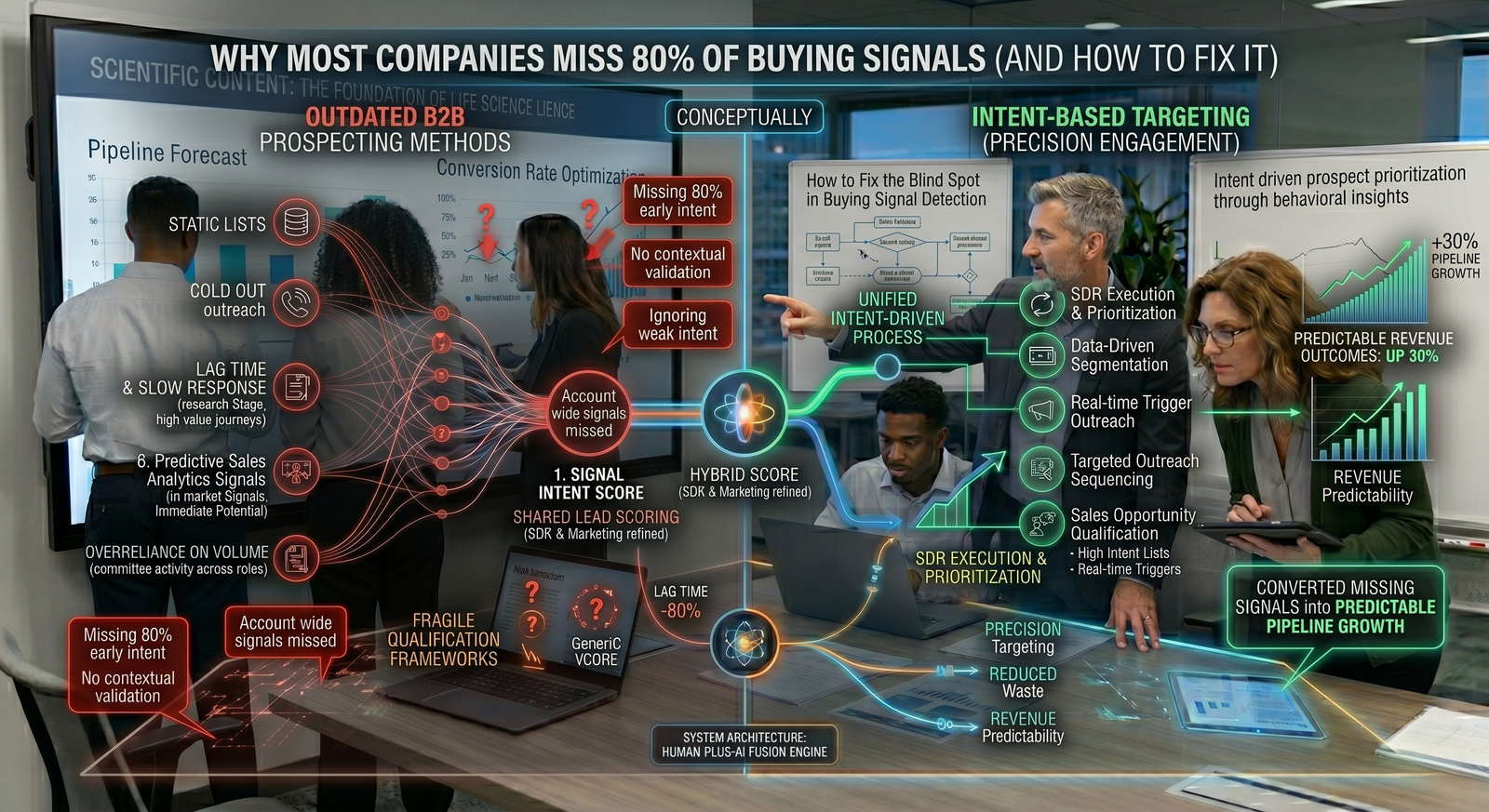
B2B prospecting is undergoing a major shift. The old approach of building static lists, blasting cold outreach, and relying on firmographic filters is steadily losing effectiveness. Buyers today leave behind behavioral signals across multiple channels, and the companies that know how to interpret those signals are consistently outperforming everyone else.
This is where intent based targeting comes in. Instead of guessing who might be interested, teams focus on identifying who is already showing signs of active research or purchase consideration. The result is more relevant outreach, higher conversion rates, and less wasted effort across the entire sales process.
The Shift From Traditional Prospecting to Intent Based Targeting
Why intent based targeting strategy is reshaping modern B2B outreach
Traditional prospecting assumes that the right company profile automatically means buying interest. But in reality, many “perfect fit” accounts are not in market at all. Intent based targeting changes this by focusing on actual behavior, such as content engagement, product page visits, and repeated research activity.
This shift is fundamentally changing how outreach works. Instead of pushing messages to broad lists, sales teams are now engaging accounts that are already warming up to a solution.
Limitations of outdated prospecting methods in B2B sales
Old prospecting models rely heavily on static data points like industry, company size, or job titles. While useful for segmentation, they do not indicate timing or urgency. This often leads to wasted outreach efforts and low response rates.
In practice, teams end up contacting companies that simply are not ready to buy, which slows down pipeline velocity and reduces efficiency.
Moving from static lists to dynamic intent driven targeting
One of the biggest improvements in modern sales systems is the move toward dynamic targeting. Instead of building a list once and reusing it for months, intent based systems continuously update based on live engagement data.
This means the focus shifts from “who fits our ICP” to “who is actively showing interest right now.”
How buyer behavior is redefining targeting accuracy
Buyer behavior has become the most reliable signal for targeting. Actions like repeat website visits, content downloads, and product comparisons are far stronger indicators than demographic filters alone.
When these behaviors are tracked properly, targeting accuracy improves significantly, and sales conversations become more timely and relevant.
B2B Buyer Intent Data Targeting and Modern Sales Precision
Intent data gives sales teams visibility into what prospects are actively researching. This allows for a much more precise form of targeting compared to traditional methods.
Instead of treating all leads equally, teams can now prioritize based on behavior intensity. For example, someone repeatedly visiting a pricing page signals much stronger intent than someone reading a general blog post.
When used effectively, intent data helps reduce wasted outreach and ensures sales teams focus only on accounts that show real potential for conversion.
High Intent Account Targeting for Revenue Focus
High intent targeting is about identifying accounts that are already deep in the buying process. These accounts often show multiple engagement signals within a short period of time.
A typical high intent account might:
- Visit product or pricing pages multiple times
- Engage with comparison or case study content
- Show activity across multiple stakeholders in the same organization
These behaviors indicate that the account is actively evaluating solutions. Prioritizing these accounts leads to stronger pipeline quality and faster deal cycles.
Predictive Audience Targeting in B2B Sales
Predictive targeting takes intent a step further by forecasting which accounts are likely to convert in the near future. Instead of only reacting to current behavior, it uses historical patterns and machine learning models to identify future opportunities.
This helps teams spot high value accounts earlier in the buying journey, even before they show strong explicit intent signals. As a result, outreach becomes more proactive and strategically timed.
Intent Driven Account Based Marketing (ABM) Strategies
Account based marketing becomes significantly more powerful when combined with intent signals. Instead of targeting accounts purely based on fit, teams can prioritize accounts showing active interest.
This allows for more meaningful personalization. Messaging can be tailored based on what the account is actually researching, not just who they are.
In practice, this leads to better engagement because outreach feels relevant rather than generic.
In Market Buyer Identification for Smarter Prospecting
In market identification focuses on detecting accounts that are actively researching solutions like yours right now. These are some of the highest value opportunities in B2B sales.
What makes this powerful is timing. Engaging an account while they are still in the decision making phase dramatically increases the chances of conversion compared to reaching out after they have already chosen a vendor.
Behavioral Targeting for B2B Sales Accuracy
Behavioral targeting looks at how prospects interact across channels, not just who they are on paper. This includes website activity, email engagement, and content consumption patterns.
The key insight here is that behavior tells a more accurate story than demographics alone. Someone repeatedly engaging with technical content is likely deeper in the buying process than someone casually browsing.
When combined, these signals create a much clearer picture of intent.
Purchase Intent Signal Targeting for Conversion Growth
Purchase intent signals are the clearest indicators of buying readiness. These include actions such as:
- Viewing pricing or product comparison pages
- Engaging with high value case studies
- Returning multiple times within a short timeframe
These signals are strong indicators that a prospect is moving from research into decision mode. Acting on them quickly is critical for improving conversion rates.
Data Driven Prospect Targeting for Modern Sales Teams
Data driven targeting removes guesswork from prospecting. Instead of relying on intuition, teams use structured data models that combine intent signals, demographic fit, and firmographic data.
This creates a more reliable and scalable targeting system. It also ensures that decisions are based on evidence rather than assumptions.
Real Time Intent Signal Tracking for Immediate Action
Real time tracking allows teams to respond while interest is happening, not after it has passed. This is especially important in competitive markets where timing can determine who wins the deal.
When a prospect shows sudden spikes in engagement, such as multiple visits in a short period, it creates an opportunity for immediate outreach.
Sales Intelligence Targeting Methods for Better ROI
Sales intelligence platforms bring together multiple data sources to improve targeting decisions. Instead of relying on one channel, teams get a unified view of buyer behavior.
This helps reduce wasted outreach and improves the quality of conversations by focusing only on accounts with strong signals.
Lead Prioritization Using Intent Data
Intent based prioritization ensures that sales teams spend their time on the most promising leads. Rather than working through static lists, they focus on dynamically ranked opportunities.
This improves efficiency and increases conversion rates without increasing workload.
Hyper Targeted Outbound Campaigns in Modern Prospecting
Outbound campaigns become significantly more effective when they are based on intent signals. Instead of generic messaging, outreach is tailored to what the buyer is actively researching.
This improves relevance, which naturally leads to higher response rates and better engagement quality.
Intent Segmentation for Marketing Campaigns
Intent segmentation groups audiences based on how ready they are to buy. This allows marketing teams to tailor messaging more effectively across different stages of the buyer journey.
For example, early stage audiences may receive educational content, while high intent accounts receive product focused messaging.
Conversion Focused Targeting Strategy in B2B Sales
Conversion focused targeting is about aligning all outreach efforts with revenue outcomes. Instead of maximizing activity, teams focus on maximizing conversion probability.
This shift improves overall ROI because resources are allocated more efficiently.
Why Intent Based Targeting Outperforms Traditional Prospecting
Intent based targeting consistently outperforms traditional methods because it focuses on timing, behavior, and relevance rather than static assumptions.
In simple terms:
Traditional prospecting is about reach
Intent based targeting is about readiness
This difference leads to faster pipelines, higher conversion rates, and better sales efficiency.
Final Thoughts
Intent based targeting is no longer optional in modern B2B sales. It has become the foundation of how high performing teams identify, prioritize, and engage prospects.
By shifting from static lists to behavior driven insights, companies can dramatically improve targeting accuracy and reduce wasted effort. More importantly, they can engage buyers at the exact moment when interest is highest, which is where most deals are actually won.
If there is one takeaway, it is this: in modern sales, timing and intent matter far more than volume.
Find what you’re reading informative so far? Then why not read more by visiting our blog? We keep you up-to-date every week with how-to guides and strategies to B2B lead generation every single week! Click here to get started!