

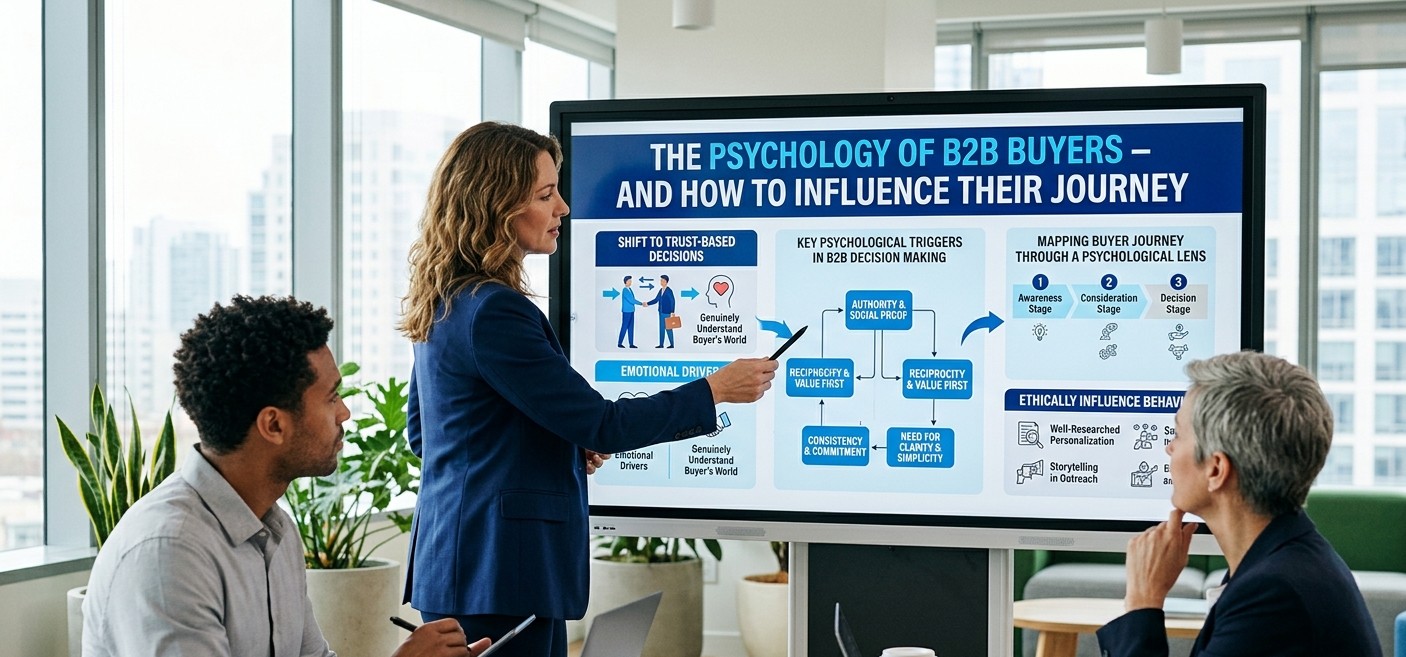
The Psychology of B2B Buyers – and How to Influence Their Journey
Why Buyer Psychology Matters in B2B
Shift from Transactional Selling to Trust-Based Decision Making
B2B lead generation and sales have evolved beyond one-time transactions. Today, the buying process is more relationship-driven and deeply rooted in trust.
Buyers no longer want to be sold to; they want to be understood. The brands that win are those that show genuine insight into a buyer’s world: their pressures, risks, and motivations.
When your outreach and messaging reflect that understanding, you move from being “just another vendor” to a trusted partner.
Psychological Insight Drives Stronger Lead Generation and Conversions
After today’s post, you will see that understanding buyer psychology doesn’t just help sales teams close deals; it shapes the entire B2B lead generation strategy.
Every email, ad, and LinkedIn post should speak to how your prospect thinks and feels. When messaging resonates with how they make decisions, engagement skyrockets and conversions follow naturally.
B2B Buyer’s Mindset in 2025
Longer Decision Cycles and Higher Stakes
Today’s B2B buyers are more cautious, analytical, and risk-averse than ever. A general case-study and sweet words will no longer sway the typical B2B buyers. They have too much on the line to just jump into any offer that fall to their laps.
Budgets are scrutinized, multiple stakeholders get involved, and every purchase must tie back to measurable ROI. The result? Longer buying cycles. This put emphasis on a stronger need for trust and data-backed assurance before commitment.
The modern buyer’s mindset is less about impulse and more about confidence. They’ll only say “yes” when they’re sure it’s the safest, smartest move for their business.
Group Decision-Making and Consensus Building
In 2025, buying decisions rarely rest on one person.
A typical B2B deal involves 6–10 stakeholders; from technical evaluators to financial controllers to their CEOs. This group dynamic introduces layers of psychological influence: internal politics, validation seeking, and reputation management.
For marketers, this means your outreach must appeal not only to the primary contact but also equip them to persuade others internally.
Emotional Drivers Hidden Behind Rational Choices
Even in B2B, decisions aren’t purely logical. Behind every spreadsheet is a human making a judgment call.
Fear of loss, desire for recognition, and protection of one’s professional reputation are powerful motivators.
When your brand messaging speaks to both the emotional safety (“You won’t regret this decision”) and rational assurance (“Here’s the proof it works”), you win both hearts and minds.
Key Psychological Triggers in B2B Decision Making
Authority and Social Proof
Buyers look for signals that validate their decision. Testimonials, case studies, and third-party endorsements build the authority that de-risks the purchase.
Show them you’ve solved this problem before; for people like them.
Reciprocity and Value First
Give before you ask. Sharing insights, playbooks, or industry data builds goodwill and positions your brand as a trusted advisor.
This principle of reciprocity turns awareness into curiosity, and then curiosity into conversations.
Consistency and Commitment
Small “yeses” lead to bigger commitments. Start by inviting buyers to a quick call, download, or micro-action. Once they’ve invested time or effort, they’re psychologically inclined to continue the journey.
Need for Clarity and Simplicity
In complex B2B decisions, clarity wins. Confused buyers don’t buy.
Simplify your messaging. Replace jargon with outcomes. Make it easy for stakeholders to explain your value internally; that’s where deals are truly won.
Mapping Buyer Journey Through a Psychological Lens
Awareness Stage
At this stage, your goal is curiosity and relevance. Buyers are exploring problems, not solutions. Use educational content, thought leadership, and relatable storytelling to make them aware of the challenge and your expertise.
Consideration Stage
This is where trust and authority matter most. Case studies, social proof, and personalized outreach play a big role. Show that you understand their unique context and that your solution aligns with their goals.
Decision Stage
Here, buyers are assessing risk. Reinforce their confidence through clear ROI projections, reference calls, and post-sale support visibility. Reduce uncertainty and you will reduce friction.
Ethically Influence B2B Buyer Behavior
Using Well-Researched Personalization to Show Understanding
Personalization goes beyond using a name or company logo. It’s about demonstrating research and empathy. Reference specific pain points, market trends, or achievements relevant to the prospect.
When a buyer feels “this was written for me,” trust skyrockets.
Align Sales Conversations to Their Buying Motivations
Every buyer has an internal motivation; it could be performance, recognition, or stability. Great salespeople listen for those cues and align their pitch accordingly.
It may sounds like manipulation, but it’s not. It’s resonance; showing that your solution supports what they already care about and that your solutions are the perfect fit.
Nurture Emotionally While Still Supporting Rationality
Use emotional storytelling to inspire, then back it up with data and logic. This balance ensures buyers feel confident and validated in their choice.
Practical Strategies to Apply Buyer Psychology in B2B Lead Generation
Craft Messages that Speak to Pain Points and Aspirations
Effective B2B lead generation content doesn’t just highlight features; it connects to pain points and aspirations. Speak to both the frustrations they’re facing now and the future they want to create.
Use Storytelling and Narrative in Outreach
Stories cut through noise. Use short, real examples of transformation “how X company solved Y problem in 3 weeks.” Keep it concise and outcome-driven.
Ensure That Nurture Sequences Build Confidence, Not Pressure
Pushing too hard creates resistance. Instead, design nurture campaigns that steadily reinforce confidence; with insights, social proof, and gentle invitations to engage.
Common Mistakes in Navigating Buyer Psychology
Assuming All B2B Decisions Are Purely Logical
Data matters; but people still buy from people. Don’t ignore the emotional factors that drive decisions.
Lack of Human Context and Understanding
Templates and automation kill authenticity. Every message should feel intentional and human.
Ignoring Internal Buying Dynamics
Don’t just sell to one stakeholder. Equip your champion with materials to influence the rest of the decision group.
Final Thoughts
Empathy and timing are the real levers in modern B2B lead generation.
Understanding buyer psychology helps you craft messages that resonate, build trust faster, and close deals with less resistance.
At its core, great marketing isn’t about manipulation (as much as a lot of people say it is. It’s about aligning your offers with what they feel.
When you understand how buyers think, feel, and decide, you stop chasing leads… and start guiding journeys.
If you reached all the way down here and find what you read interesting, why not check out more of our posts? Click here to get started!