

How to Turn Buying Signals Into Cold Outreach Opportunities
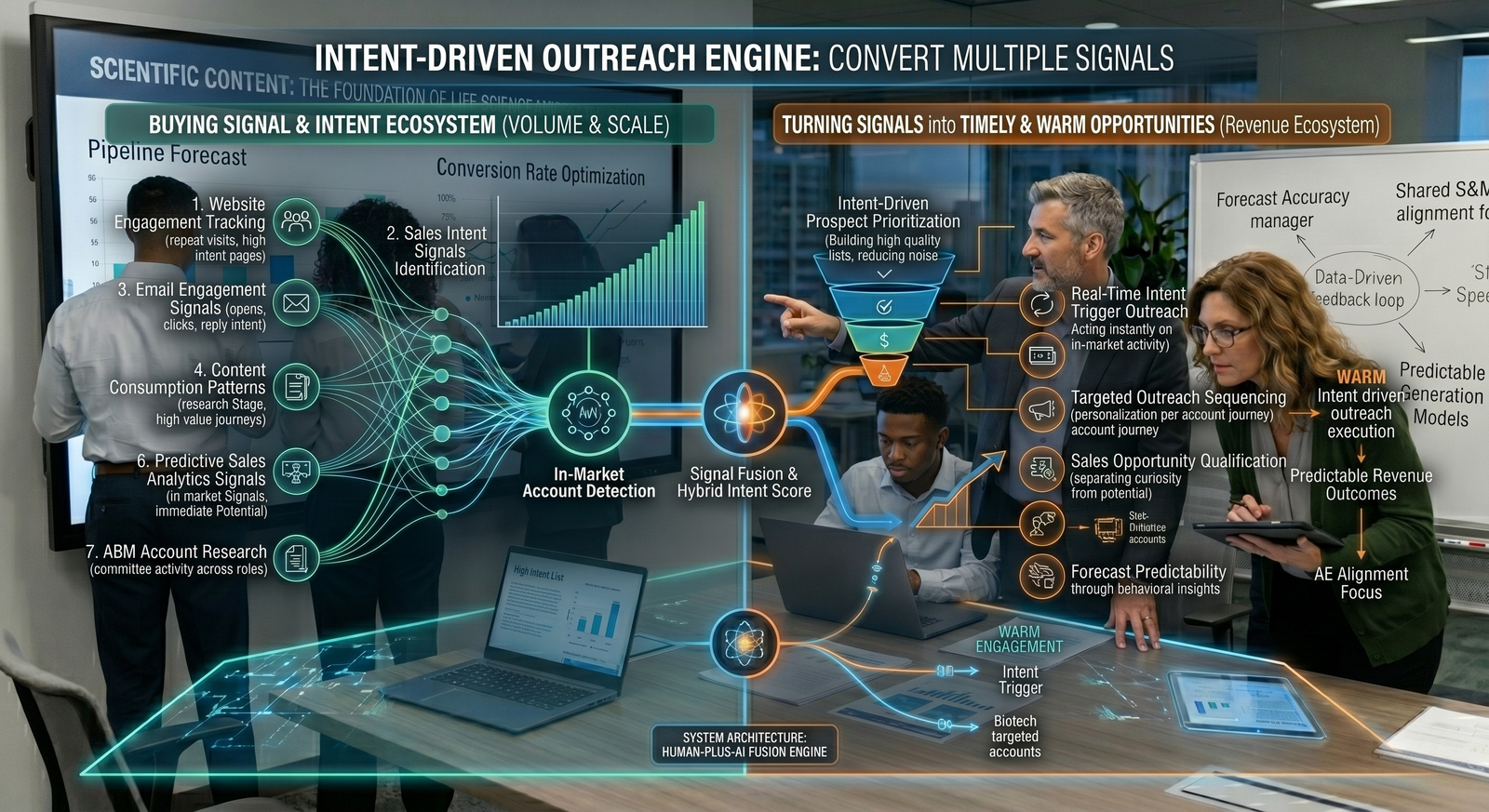
In modern B2B sales, success in cold outreach is less about volume and more about timing and relevance. The ability to identify buying signals has become one of the most important skills for sales teams that want to consistently generate pipeline without relying on guesswork.
Instead of contacting random prospects from static lists, high performing teams now focus on behavioral and intent based data. These signals reveal who is actively researching solutions, who is showing interest, and who may already be close to making a decision. When used correctly, they transform cold outreach into warm, timely engagement.
Why Buying Signals Are the Foundation of Modern Cold Outreach
How buying signal detection in B2B sales transforms outbound effectiveness
Buying signal detection in B2B sales changes how outreach is prioritized. Rather than treating every lead equally, teams can focus on prospects showing real engagement such as repeated website visits or content downloads. This makes outreach more relevant and significantly improves response rates.
Moving from cold lists to behavior driven outreach
Traditional outbound relies on static lists built from firmographic filters. Behavior driven outreach adds a deeper layer by analyzing what prospects are actually doing. This shift ensures outreach is based on real interest instead of assumptions.
Why timing matters more than volume in outreach success
Sending more emails does not guarantee better outcomes. A well timed message sent when a prospect is actively researching often outperforms dozens of cold touches sent at the wrong stage.
Aligning outreach with real buyer readiness
Buying signals help sales teams align outreach with actual readiness. This ensures conversations start when prospects are more open to discussing solutions instead of when they are still in early discovery mode.
Sales Intent Signals Identification for Outreach Timing
How sales intent signals identification reveals outreach opportunities
Sales intent signals identification helps uncover prospects who are actively researching solutions in your category. These signals can include repeat visits to solution pages or engagement with comparison content.
Distinguishing research behavior from purchase intent
Not all engagement signals indicate readiness to buy. Research behavior reflects learning and exploration, while purchase intent shows deeper evaluation and decision preparation.
Identifying engagement patterns that signal readiness
Patterns such as multiple sessions in a short time frame or interaction with pricing content often indicate a shift from curiosity to consideration.
Converting intent signals into outreach triggers
When engagement crosses a certain threshold, it can be used as a trigger for outreach. This ensures sales teams engage at the right moment rather than too early or too late.
B2B Buyer Behavior Tracking for Opportunity Discovery
How B2B buyer behavior tracking uncovers hidden prospects
Buyer behavior tracking reveals anonymous or inactive prospects who are actively researching behind the scenes. These are often missed in traditional outbound approaches.
Monitoring multi channel engagement across touchpoints
Prospects interact across multiple channels such as websites, emails, and social media. Tracking these interactions provides a complete picture of intent.
Detecting repeat activity as a strong outreach cue
Repeated engagement is one of the strongest indicators of interest. When prospects return multiple times, it suggests growing seriousness about solving a problem.
Turning behavioral insights into outreach lists
Behavioral data can be structured into dynamic lists that update automatically based on engagement levels, ensuring outreach is always relevant.
Purchase Intent Indicators That Trigger Cold Outreach
How purchase intent indicators show when to engage
Purchase intent indicators help identify when a prospect is moving closer to a decision. This includes actions like requesting demos or reviewing pricing pages.
Recognizing urgency based behavioral shifts
Sudden increases in activity often signal urgency. For example, multiple page visits in a short time window may indicate active vendor comparison.
Mapping intent strength to outreach priority
Not all signals carry equal weight. High intent actions should always take priority over general engagement such as blog reading.
Avoiding premature or irrelevant outreach
Without proper interpretation, teams risk reaching out too early. This can reduce credibility and lower response rates.
High Intent Prospect Recognition in Cold Outreach Strategy
How high-intent prospect recognition improves conversion rates
Focusing on high intent prospects leads to higher conversion rates because outreach aligns with real buying interest.
Identifying accounts ready for immediate engagement
Accounts that repeatedly engage with product or pricing content are often ready for direct outreach and sales conversations.
Filtering low intent leads before outreach begins
Filtering ensures that sales teams spend time only on prospects with real potential, improving overall efficiency.
Focusing outbound efforts on warm opportunities
Warm opportunities respond more positively because outreach feels timely and relevant to their current needs.
Account Based Buying Signals for Targeted Outreach Campaigns
How account-based buying signals identify organization level intent
Account based signals show when multiple individuals within the same organization are engaging with content, suggesting coordinated interest.
Detecting buying committee activity across roles
Different stakeholders such as technical users and decision makers often engage separately. Together, this forms a strong buying signal.
Coordinating outreach across multiple stakeholders
Understanding role based engagement allows sales teams to tailor messaging for each stakeholder within the account.
Prioritizing high value accounts for engagement
Accounts with multiple active signals are typically high value opportunities worth prioritizing in outbound strategy.
Lead Scoring Based on Behavior for Outreach Prioritization
How lead scoring based on behavior improves outreach targeting
Behavior based scoring assigns value to different actions, helping teams prioritize outreach based on engagement quality.
Weighting high value engagement actions
High intent actions such as demo requests should carry more weight than passive browsing behavior.
Combining demographic and intent data
Blending firmographic fit with behavioral signals creates a more accurate picture of sales readiness.
Automating outreach qualification workflows
Automation ensures that only qualified leads are passed into outbound sequences, improving efficiency at scale.
Real Time Buyer Intent Data for Immediate Outreach Opportunities
How real-time buyer intent data enables fast engagement
Real time intent data allows teams to respond immediately when buying interest is detected.
Acting on in market behavior instantly
When prospects are actively researching solutions, fast outreach significantly increases the chance of engagement.
Detecting active buying signals as they occur
Live tracking helps sales teams identify opportunities before competitors can respond.
Improving speed to lead in outbound campaigns
Faster response times consistently lead to higher conversion rates in outbound sales.
Sales Opportunity Qualification Signals in Outreach Strategy
How sales opportunity qualification signals define outreach readiness
Qualification signals help determine whether a prospect is ready for meaningful sales engagement.
Separating curiosity from real sales potential
Not all engagement translates into revenue potential. Proper qualification prevents wasted effort.
Validating opportunities using multiple signals
Using multiple data points ensures that outreach decisions are based on reliable intent rather than single actions.
Improving outbound efficiency and focus
Better qualification leads to more focused outreach and stronger pipeline quality.
Website Engagement Tracking for Leads in Outreach Discovery
How website engagement tracking for leads reveals buying interest
Website behavior provides insight into what prospects are actively evaluating.
Identifying high intent pages and behaviors
Pages such as pricing, product comparison, and case studies often signal stronger buying intent.
Using repeat visits as outreach triggers
Repeated visits indicate growing interest and can be used to trigger outbound engagement.
Converting web behavior into outbound opportunities
Website analytics can be directly integrated into outbound systems to identify prospects in real time.
Email Engagement Signals in Sales Outreach Timing
How email engagement signals in sales guide outreach decisions
Email engagement provides insight into how prospects are interacting with outbound communication.
Open, click, and reply behavior as intent markers
Replies and clicks indicate stronger engagement than passive opens alone.
Differentiating passive interest from active engagement
Not all email engagement reflects buying intent, so context is important when interpreting behavior.
Timing follow ups based on email behavior
Engagement spikes help determine the best time to follow up for higher response rates.
Content Consumption Patterns for Buyers as Outreach Triggers
How content consumption patterns for buyers indicate readiness
The type of content consumed helps identify where prospects are in the buying journey.
Mapping educational content engagement to intent level
Early stage buyers consume educational content, while late stage buyers consume comparison and decision content.
Identifying high value content journeys
A progression from blogs to case studies often signals increasing purchase readiness.
Using content signals for personalized outreach
Content behavior enables tailored messaging that aligns with prospect interests.
Predictive Sales Analytics Signals for Outreach Planning
How predictive sales analytics signals forecast outreach success
Predictive models use historical and behavioral data to estimate conversion likelihood.
Identifying accounts likely to convert soon
These models highlight accounts that are statistically more likely to become opportunities.
Combining behavioral and historical data insights
Blending different data types improves prediction accuracy and prioritization.
Prioritizing outreach based on predicted outcomes
Sales teams can focus on accounts with the highest probability of success.
In Market Account Detection for Cold Outreach Focus
How in-market account detection reveals active buyers
In market detection identifies companies actively researching solutions in real time.
Identifying accounts already in purchase mode
These accounts show consistent engagement across multiple channels.
Avoiding wasted outreach on cold accounts
Filtering out non active accounts improves efficiency and reduces outreach fatigue.
Increasing outbound efficiency through timing
Engaging in market accounts significantly increases response rates.
Intent Driven Prospect Prioritization for Outreach Execution
How intent-driven prospect prioritization improves outreach results
Prioritization ensures outreach focuses on prospects most likely to convert.
Building high quality outreach lists from signal data
Signal based lists outperform traditional static databases in engagement quality.
Reducing noise in outbound workflows
Fewer irrelevant leads means more time spent on meaningful conversations.
Aligning messaging with strongest intent signals
Messages can be tailored based on specific behaviors and interests.
Turning Multiple Buying Signals Into Outreach Strategy
Combining signals for stronger outreach accuracy
Multiple signals combined provide a more complete and reliable view of intent.
Creating a unified intent based outreach system
Integrating all signals into one framework ensures consistent decision making.
Improving timing, relevance, and response rates
Signal driven outreach improves engagement at every stage of the funnel.
Turning intent intelligence into predictable pipeline growth
When applied consistently, buying signals create a repeatable system for generating predictable revenue.
Final Thoughts
Learning how to identify buying signals is what separates modern outbound teams from traditional spray and pray approaches. When signals are properly interpreted and applied, cold outreach becomes targeted, timely, and significantly more effective.
Instead of chasing volume, successful teams focus on intent, timing, and relevance. That shift is what ultimately drives higher response rates and more predictable pipeline growth.
Find what you’re reading informative so far? Then why not read more by visiting our blog? We keep you up-to-date every week with how-to guides and strategies to B2B lead generation every single week! Click here to get started!