

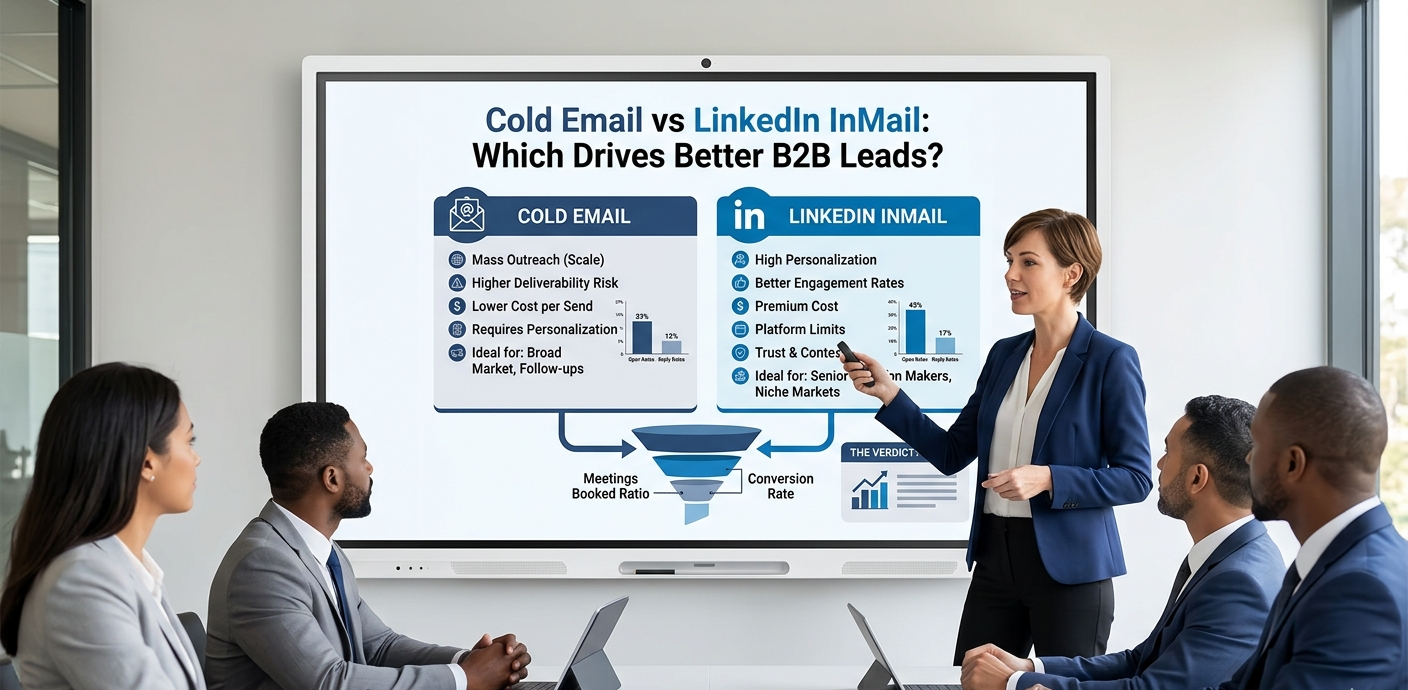
Cold Email vs LinkedIn InMail: Which Drives Better B2B Leads?
Introduction In the world of B2B lead generation, two outreach channels often stand out; cold email and LinkedIn InMail. Both have proven their worth in connecting sales teams with decision-makers. Yet, each comes with its own strengths, nuances, and strategic uses. So, which one drives better B2B leads in 2025? Let’s break it down. Why Email and InMail Dominate Modern B2B Outreach In B2B marketing, outreach success depends on visibility, personalization, and timing. Cold email and LinkedIn InMail dominate because they combine these elements. Both allow businesses to reach decision-makers directly. If done right with precise targeting and research, this means you don’t have to worry about “gate-keepers” getting in the way of you talking to the most relevant prospects. More importantly, they create a personal touchpoint in a world where buyers expect relevance over repetition. Especially in a world where AI-drafted messages are becoming more common place, this ability to be truly personal and relevant is becoming even more necessary. Rise of Personalized and Conversation-Based Lead Generation If you’ve been following our posts for awhile, you’ll know that generic email have been left behind all the way since around 2023. Gone are the days of mass-blasting templated emails. Now each emails needs to be drafted and tailored specifically to each prospect in order to succeed. Modern B2B lead generation is about conversation-driven outreach. This means that messages will need to feel human, not automated. Whether it’s through the inbox or LinkedIn, at the end of the day, success comes from relevance, storytelling, and genuine intent to help; not just sell. What Are They? What is Cold Email Outreach? Cold email outreach is the practice of sending targeted, personalized emails to potential clients who haven’t interacted with your business before. It’s one of the oldest and most scalable forms of digital prospecting. The process usually involves: Building a high-quality prospect list (using tools like Apollo or ZoomInfo) Personalizing outreach based on the recipient’s role, company, and pain points Sending a sequence of emails designed to start a conversation; not push a sale (that comes after you’ve build your connection!) Example: A cybersecurity firm emails IT directors in financial institutions offering a free vulnerability assessment. The email is concise, relevant, and ends with a soft call-to-action; leading to 12 booked demos in a week. What is LinkedIn InMail? LinkedIn InMail lets users send direct messages to people they’re not yet connected with. Unlike cold email, InMail works within the LinkedIn platform, giving you a more social and professional context. It’s especially useful when targeting mid-to-senior level executives who are active on LinkedIn and when you want to spark a conversation rather than send a pitch. The best InMail messages blend professional relevance with a human tone. Something along the lines of “Hey, I saw your recent post on AI in manufacturing. Loved your point about data transparency…” instead of “I’d love to show you our AI tool.” Cold Email vs LinkedIn InMail: Side-by-Side Comparison Reach and Scalability Cold Email: Wins on volume. You can reach hundreds or thousands of prospects daily with the right automation tools. LinkedIn InMail: More limited by platform restrictions and subscription plans. Great for targeted, smaller campaigns. Response Rates and Engagement Cold Email: Average reply rates range from 10–20% depending on personalization and industry. InMail: Typically higher engagement (20–40%) because messages are tied to professional profiles and perceived as more credible. Costs and ROI of Campaign Cold Email: Low cost per send; higher setup effort for list building and compliance (GDPR, CAN-SPAM). InMail: Costlier on a per-message basis, but potentially higher ROI for strategic, high-ticket outreach. Deliverability and Platform Limits Cold Email: Requires warm-up, domain reputation management, and proper sending limits. InMail: No deliverability issues, but limited by credits and LinkedIn’s daily message caps. When Cold Email Works Best Ideal Scenario for Using Cold Emails Cold email shines in high-volume lead generation. Especially for outbound teams targeting specific verticals or geographies. It’s ideal when: You have a large TAM (Total Addressable Market) You’re running ABM campaigns at scale You need a predictable, measurable outbound engine Tips to Improve Cold Email Effectiveness Personalize the first line to show relevance Keep the message under 100 words Use conversational CTAs (“Worth exploring?” instead of “Schedule a meeting”) Monitor deliverability and domain health Follow up — 70% of responses come after the second email When LinkedIn InMail Works Best Ideal Scenario for Using LinkedIn InMails InMail excels in relationship-driven and warm outreach scenarios. It’s great for: Nurturing leads already in your network Reaching C-level decision-makers Building thought leadership before pitching Tips for Standing Out in a Crowded LinkedIn Inbox Reference something specific from the prospect’s profile or activity Keep it conversational. Do NOT make it sound salesy Avoid attachments or links in the first message Follow up with content (case studies, posts, or value-driven comments) The Multi-Channel Approach How to Use LinkedIn for Soft Touches and Email for Follow-ups The most effective B2B outreach combines both. Start by engaging on LinkedIn. Comment on posts, send connection requests, or share relevant insights. Once your name is familiar, follow up with a personalized cold email that feels like a continuation of the conversation. Watch your conversion rate soar! Common Mistakes When Using Both Channels Over-automation: Nothing kills credibility faster than robotic, mass-blasted messages. Poor targeting: Relevance beats reach every time. Lack of value: If your message doesn’t educate, inspire, or help, it’s noise. Key Metrics to Track Open Rates Shows how compelling your subject lines and first sentences are. Benchmark: 40–60% for cold email; 70%+ for InMail. Reply Rates Indicates message relevance and tone. Benchmark: 10–20% (email), 20–40% (InMail). Meetings Booked Ratio The true KPI for lead generation success. People can always open and reply, and that’s a good thing. But how many conversations turn into actual calls? Conversion Rate Tracks closed deals. Often lower for InMail but higher-value due to the warm nature of connections. The Verdict? Summary of Pros and Cons of Both Factor Cold Email LinkedIn InMail Reach