

What Most Companies Get Wrong About Intent-Based Marketing
Is Intent-based Marketing Still Worth the Hype?
Why Intent Data Is Powerful
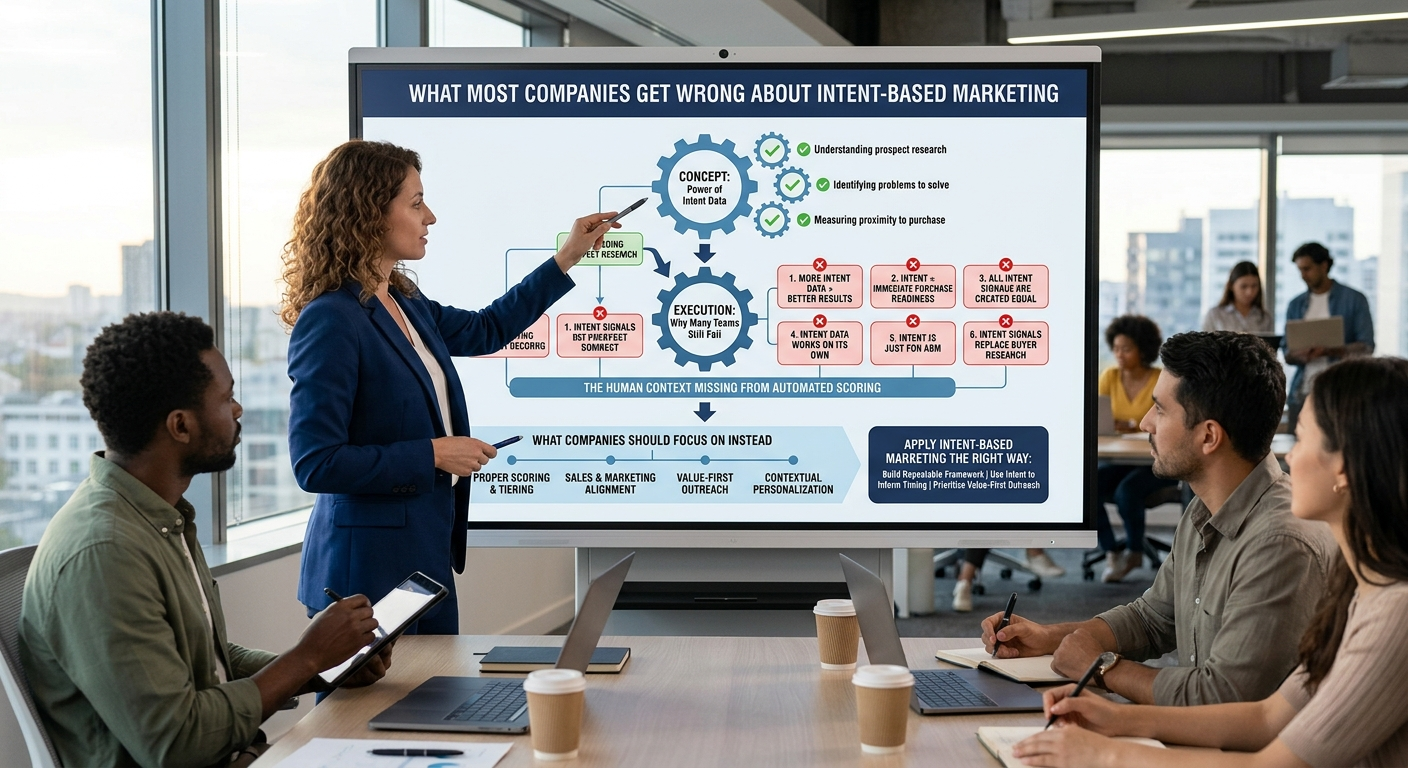
Intent-based marketing has become one of the most talked-about strategies in B2B. It helps companies understand what prospects are researching, what problems they are trying to solve, and how close they might be to making a purchasing decision. When applied correctly, intent signals can accelerate pipelines, improve targeting, and significantly increase conversion rates.
Why So Many Teams Still Fail to Use It Correctly
The problem is not the concept. It is the execution. Many organizations buy intent tools, plug them into their tech stack, and assume the insights will magically produce revenue. Without context, strategy, and proper alignment, intent data becomes just another dashboard that no one knows how to interpret. This leads to misalignment, missed opportunities, and frustrated sales teams.
Misconception #1: “More Intent Data Means Better Results”
The Difference Between Data Volume and Data Quality
Many companies believe that more signals automatically lead to better targeting. In reality, quality matters far more than quantity. Ten high-quality signals that reflect real buying behavior are more valuable than a hundred weak indicators like generic page views.
Why Overloading Sales with Signals Backfires
When sales teams receive endless lists of “intent accounts,” they quickly lose trust in the system. Over-alerting creates noise, not clarity. Reps waste time chasing accounts that are not actually ready to engage, and high-value opportunities get buried.
Misconception #2: “Intent = Immediate Purchase Readiness”
Understanding Buying Stages Behind Intent Signals
Intent signals reveal interest, but interest does not always mean urgency. A spike in topic searches or content consumption might simply indicate curiosity or early-stage problem awareness. Recognizing where a buyer sits across awareness, consideration, and decision stages is crucial.
Why Early-Stage Intent Requires Nurture, Not a Hard Sell
Reaching out too aggressively to early-stage buyers often pushes them away. These prospects need education, not pressure. Companies that combine intent with value-driven nurture sequences see higher conversion rates and lower pipeline drop-off.
Misconception #3: “All Intent Signals Are Created Equal”
First-Party vs. Third-Party vs. Product-Level Intent
First-party intent includes website visits, product page engagement, and email interactions. Third-party intent comes from external networks such as research sites or publisher data. Product-level intent goes deeper and shows interest specifically in your solution or category.
Each type tells a different story, and none should be interpreted in isolation.
Which Signals Actually Predict Sales Opportunities
Signals tied to higher buying intent, such as pricing page visits, competitor comparison activity, or multiple engagements across channels, tend to correlate strongest with eventual opportunities. Companies that treat every signal as equally important miss the nuance that drives smarter prioritization.
Misconception #4: “Intent Data Works on Its Own”
The Human Context Missing from Automated Scoring
Automated scoring rules can be helpful, but they cannot understand the human factors behind the behavior. A spike in intent may reflect research for a conference presentation, not an upcoming purchase. Human review adds the strategic context algorithms cannot provide.
The Risk of Over-Reliance on Tools Without Strategy
Buying an intent tool without a clear process is like buying a gym membership without a workout plan. The tool does not create value on its own. It requires strategic adoption, sales alignment, and ongoing refinement.
Misconception #5: “Intent-Based Marketing Is Just for ABM”
Why Intent Is Equally Critical for Broad Lead Generation
ABM teams rely heavily on intent data, but intent is just as important for traditional demand generation. It improves segmentation, prioritization, and channel planning for broader campaigns. Even inbound teams benefit from knowing which industries or accounts show elevated research activity.
How Non-ABM Teams Can Leverage It Effectively
Traditional SDR teams can use intent insights to warm up cold outreach. Marketing teams can tailor messaging and create targeted ad audiences. Customer success teams can monitor churn risk by tracking competitor intent.
Misconception #6: “Intent Signals Replace Buyer Research”
Why Intent Still Needs ICP Alignment
Strong intent from the wrong ICP is still the wrong lead. Buying signals mean little if the company lacks fit, budget, or need. Intent only becomes powerful when paired with a clear Ideal Customer Profile.
Marrying Behavioral Data with Firmographic Fit
Companies that combine intent activity with firmographic and technographic filters see higher-quality pipelines. When you know both who the buyer is and why they are showing interest, prioritization becomes far more accurate.
Misconception #7: “Intent Data = Personalization”
Why Many Teams Still Send Generic Messages
Many companies gather intent insights but still send templated outreach. Knowing that an account is researching a topic does not guarantee that your message will resonate. Personalization requires thoughtful framing, not just inserting keywords.
Using Intent to Craft Hyper-Relevant Outreach
Intent helps you tailor the message to what the buyer is already thinking about. Referencing a specific pain point, a relevant trend, or an industry shift makes the outreach feel far more natural and valuable.
What Companies Should Focus on Instead
Proper Scoring and Tiering of Intent Signals
Prioritize signals based on strength, frequency, and alignment. Build tiers such as low intent, moderate intent, and high-intent accounts to guide your outreach cadence.
Multi-Channel Activation Across Email, LinkedIn, and Ads
Intent insights are most effective when activated across multiple touchpoints. A combination of targeted email outreach, personalized LinkedIn engagement, and tailored retargeting ads produces stronger response rates.
Sales and Marketing Alignment on What “Intent” Really Means
Both teams must agree on what qualifies as a meaningful signal, what score makes a lead “ready,” and how to engage each tier. Alignment determines whether intent data becomes revenue-driving or just noise.
How to Apply Intent-Based Marketing the Right Way
Build a Repeatable Framework
Document how you collect, interpret, score, and act on intent signals. A clear workflow ensures consistent application across teams.
Use Intent to Inform Timing, Not Just Targeting
Intent is most powerful when it helps you reach out at the right moment. Timing often determines whether a conversation turns into a meeting.
Prioritize Value-First Outreach Over Aggressive Selling
Intent shows interest, but trust still needs to be earned. Start with insights, education, and resources that align with their current stage. Pushy pitches rarely convert warm interest into meaningful opportunities.
Common Mistakes to Avoid
Treating All Accounts as “Hot Leads”
One of the biggest mistakes companies make is assuming that every spike in intent means the account is ready for immediate outreach. Intent does not equal urgency. An increase in research activity might reflect early exploration, competitive benchmarking, or even casual interest from someone outside the buying committee.
When teams treat every signal as a green light, they overwhelm prospects with premature outreach, which often damages trust and reduces engagement. The smarter approach is to categorize intent into stages and match your outreach strategy to the buyer’s likely readiness level.
Ignoring Context Behind the Signals
Intent signals are only meaningful when paired with context. A sudden increase in topic searches could mean a buyer is actively evaluating solutions. But it could also mean they are writing a blog post, preparing for a webinar, or conducting competitor research.
Instead of reacting instantly, teams should look for patterns such as repeat visits to high-intent pages, multi-channel engagement, or a sustained increase in activity over several days or weeks. Context helps you avoid false positives and makes outreach feel more relevant and timely.
Focusing on Contact-Level Data Instead of Account-Level Trends
Many companies fall into the trap of analyzing intent at the individual level only. This creates blind spots because purchasing decisions in B2B are made by groups, not single people.
Account-level intent is far more reliable because it reflects broader organizational interest. For example, if three different employees from the same company are researching similar topics, that is a much stronger indicator of buying motion than one contact viewing a blog post.
By concentrating on account-level patterns, teams gain a clearer picture of real buying activity and can prioritize with greater accuracy.
Lack of Testing and Refinement
Intent-based marketing is not a set-and-forget system. It requires continuous refinement. Buying patterns change, industries shift, and new signals become available over time.
Companies that fail to test and update their scoring models eventually lose accuracy. When intent triggers stop aligning with outcomes, sales teams lose confidence in the data.
The best-performing organizations revisit their intent model quarterly. They review which signals correlated with real opportunities, adjust the scoring rules, and adapt their workflows.
Refinement is what transforms intent data from a “nice-to-have” insight into a predictable revenue driver.
So, is it Worth the Hype?
Intent-based marketing is powerful, but it is not magic. It only creates real impact when teams use it with strategy, context, and discipline. The value is not in the volume of signals, but in how those signals are interpreted and applied.
Companies that treat intent as a shortcut to instant sales usually end up disappointed. The organizations that win are the ones that understand the nuance behind the data. They combine behavioral signals with firmographic fit, integrate insights across channels, and align sales and marketing on what intent actually represents.
Thoughtful intent-based marketing is about timing, not aggression. It’s about recognizing where a buyer is in their journey and delivering value that matches that moment. When intent guides prioritization, personalization, and sequencing, outreach feels natural rather than forced.
In the end, intent data is only as strong as the strategy behind it. When used thoughtfully, it becomes a competitive advantage that helps teams focus on the right accounts, engage with relevance, and accelerate pipeline with far more predictability.
Find what you’re reading informative so far? Then why not read more by visiting our blog? We keep you up-to-date every week with how-to guides and strategies to B2B lead generation every single week! Click here to get started!